Read the latest Gesher Gazette below! Please click on the link below to view the PDF
Click on the link below to view the latest Gesher Gazette:
Read the latest Gesher Gazette below! Please click on the link below to view the PDF
Click on the link below to view the latest Gesher Gazette:
Pupils excel at this exceptional school.
We are thrilled to announce that Ofsted has for the third time rated us as Outstanding in every area. Inspectors highlighted that “pupils excel at this exceptional school,” acknowledging the highly personalised and holistic support we provide for our students. This achievement is a testament to the incredible dedication of our staff and the hard work of our students, as well as the strong relationships we foster with our parents and the wider community.
The inspectors noted, “the school has developed an ambitious curriculum that expertly meets the varied needs of its pupils.”
We’re proud that the report reflected our Project-Based Learning approach, stating that “most subjects are taught through well-considered projects that engage and excite the pupils”, and noting how our projects “offer real-world contexts and practical experiences, helping our students develop crucial language and communication skills”.
We believe every child deserves an outstanding school experience; a huge thank you goes out to everyone in our community who has supported us on this journey so we can make this happen.
Read the latest Gesher Gazette below! Please click on the link below to view the PDF
Click on the link below to view the latest Gesher Gazette:
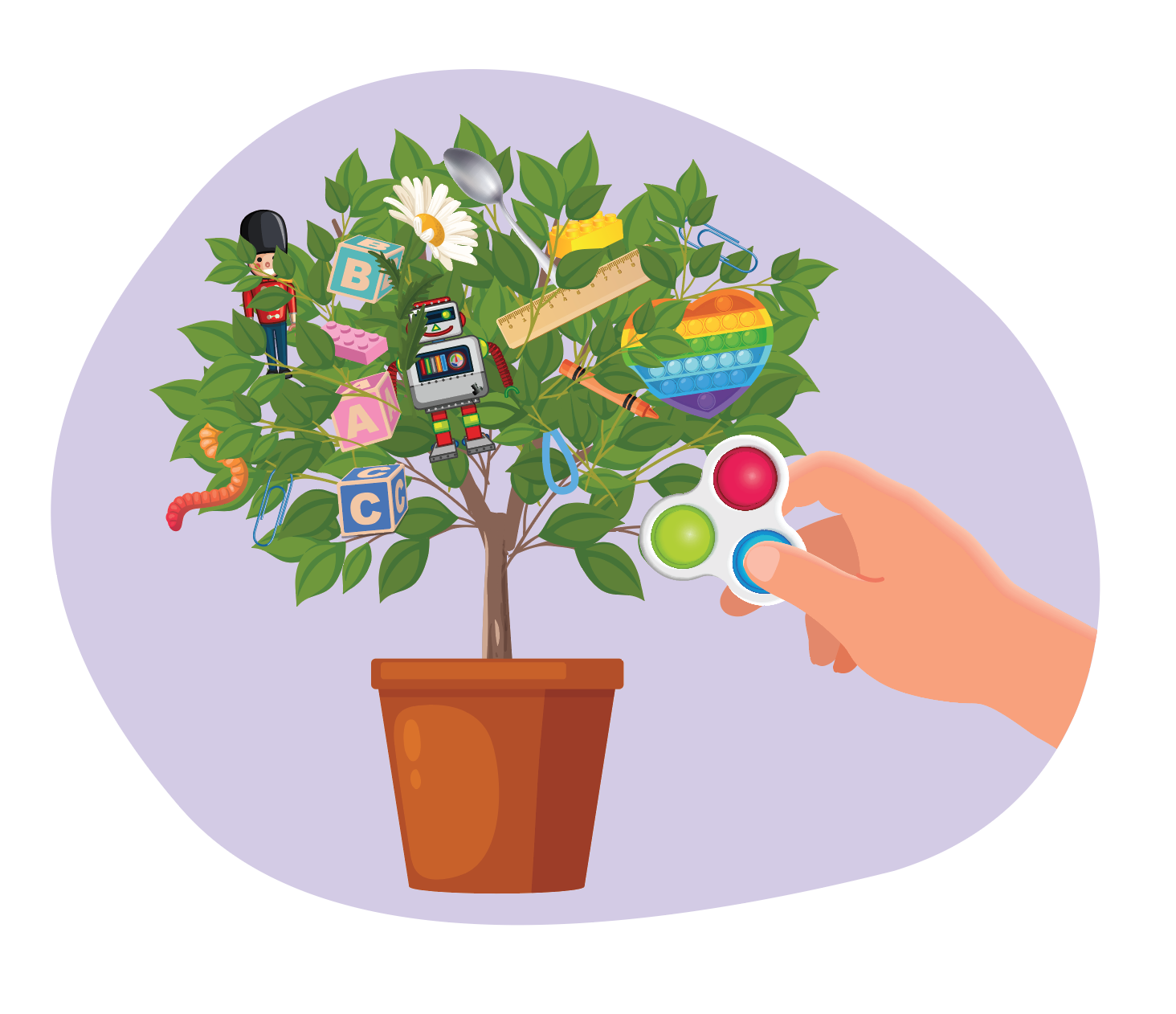 This is a story about a boy, his teacher, a wooden tree and a school full of love and learning. It reminds us that learning can and does happen anywhere and any way in a school when the culture is right.
Our School
Shefford Lower School is a large lower school in Central Bedfordshire with a significant SEND register. We don’t believe in an approach to SEND in which learners should either be in a specialist environment or a mainstream school. So, we have adapted our learning environment and teacher-student relationships to support a wholly inclusive mainstream specialist environment accessible to all young learners in our community.
We further believe that progress can take many different forms and that all children have an entitlement to leave us with every step, however small, recognised, captured and celebrated.
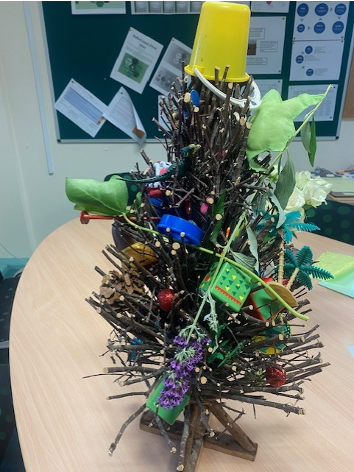
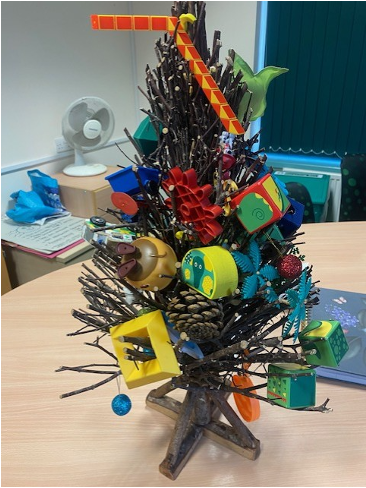
When I was young, my mother gave me a wooden Christmas tree. When I became a headteacher, with an office, I brought it into school where each December it was displayed, decorated and lit. By last summer it was looking tired and I kept reminding myself to throw it away.
Peter’s story (not his real name)
Peter is a young learner who receives a high level of adult support due to his complex needs. These include a significant speech delay, autism, social communication needs and self-care needs.
One day Peter came in because his Teaching Assistant wanted to mention something to me. As he waited, Peter saw the tree gathering dust on the top of a cupboard and gestured that he would like to see it. I had no idea that this would be the beginning of something magical!
Peter decorated this sad little tree, and then returned the next day, then each day, several times a day, beginning to talk as he did it, presenting it joyously to me and showing it to everyone along his way as he proudly walked it around the school en route to show his teacher.
He had found something in the school which brought him (and many others) joy. This tree was subsequently to become a powerful tool in his speech and language development. The creativity flowed and anything and everything became a potential decoration, from a kitchen spoon to flowers from the forest, bringing warmth and amusement to all.
After this had been going on for a month or two, someone suggested keeping the tree in Peter’s classroom as I may sometimes be in meetings,.This was until we realised that walking down to my office and saying hello was an important part of it!
The ritual continued. Peter’s confidence grew and his speech and language seemed to be coming on until one day he came in and said: “Hello Mrs Ross. Can I have the tree please?” A clearly enunciated sentence!
Reciprocal Joy
I started to take photos of this tree my mother had bought me and sent one to her to let her know it was not only still going strong but, in fact, supporting a child with additional needs to thoroughly enjoy his experience of school. My mother responded, telling me how beautiful it was, and so it continued. He would decorate a tree, show it to all around the school who would smile, share it with me and it would also make my mother’s day!
Just before his annual review I sent all the photos to his teaching assistant to share with his family at the meeting, following which she sent this reply:
Oh Polly, thank you for these pictures, they are really great. I will print them off for his review next week. He makes my day and fills it with joy every day–whether it’s through watching him carefully decorating his (your) beloved tree, some work he has done, learning he has remembered, or new vocabulary he has said to me. 🙂 Thank you for always being so supportive and welcoming when we come to see you. Helen
Educational Reflections
We realised, of course, that this had also been an exercise in relationships and belonging; Peter’s relationship with the TA and the pride she took in working with him and watching him grow. This, allied to the knowledge she developed about his interests through safe talk, had supported him to be successful. It has also facilitated relationships with other pupils and adults – and with me through his friendly visit each day.
This story is also about joy, which all learning should bring: the joy Peter brought to those around him in walking his tree through school; or that his TA gets from working creatively alongside him and making a difference; or that he brought to my office and many a meeting held there – and even the joy he brought to the lady, a retired art teacher, who had once given her daughter a small wooden tree.
Polly Ross is Headteacher at Shefford Lower School in Bedfordshire.
Professional Prompts
- In the ‘Welcome’ editorial, we said that relationships and belonging would be two of the sub-themes of this How does Polly Ross’s piece illustrate these themes?
- What are ways that students’ beliefs, interests and passions can be incorporated into the school context?
- How can school leaders be more engaged and connected to students on a regular basis?
Read the latest Gesher Gazette below! Please click on the link below to view the PDF.
Click on the link below to view the latest Gesher Gazette:
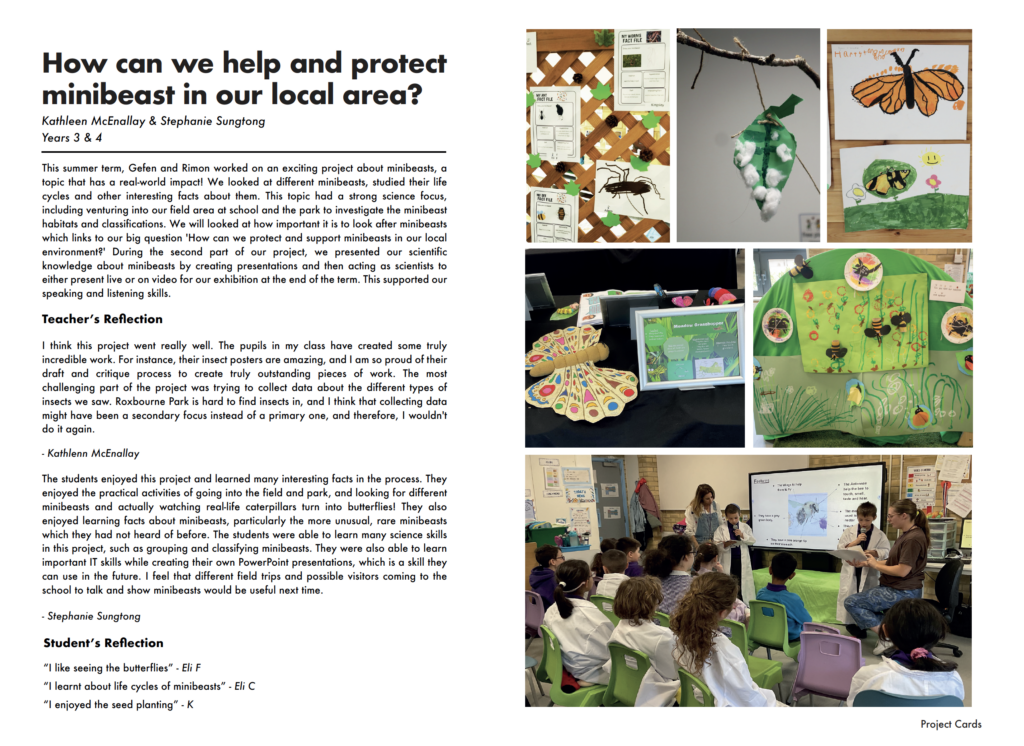
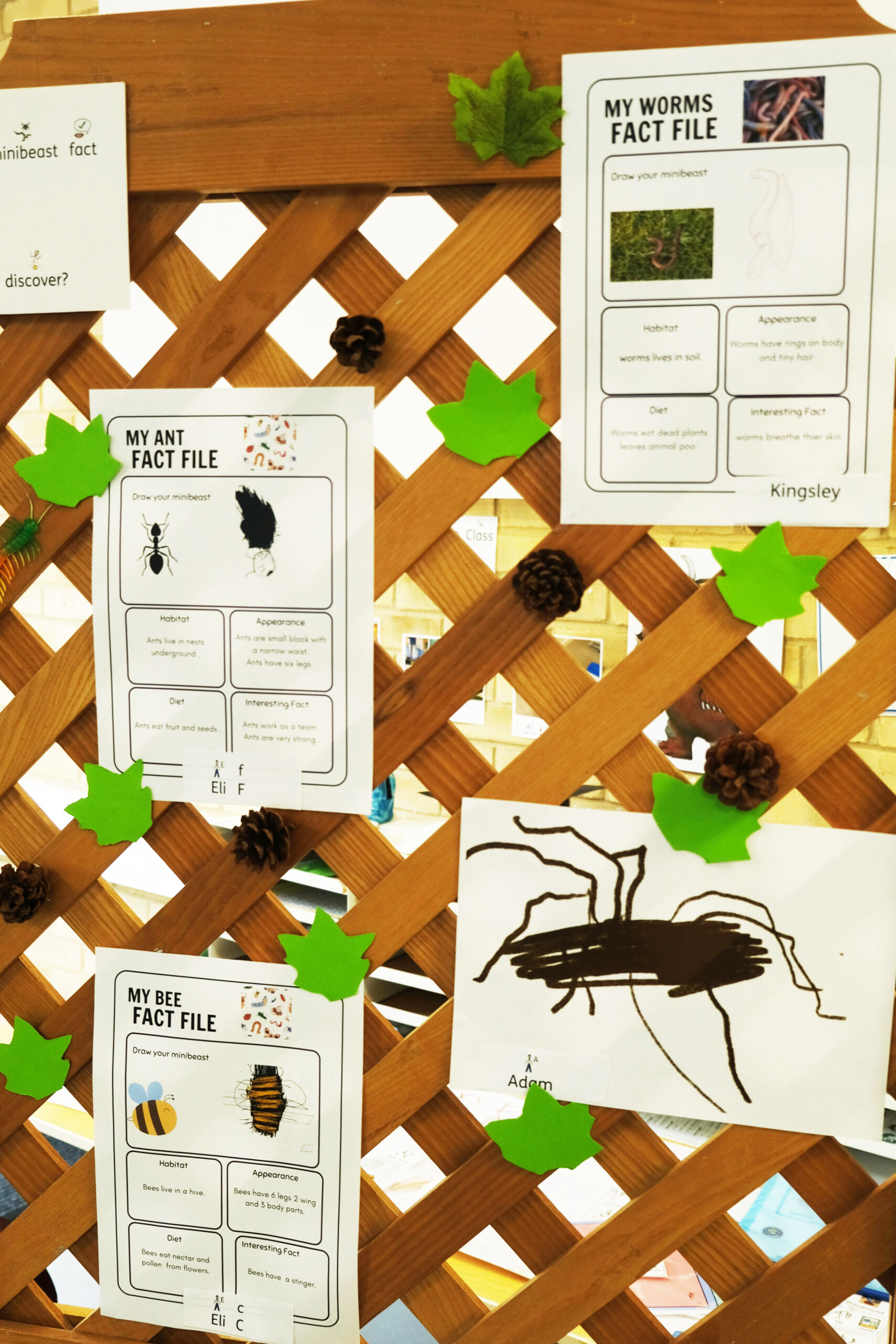
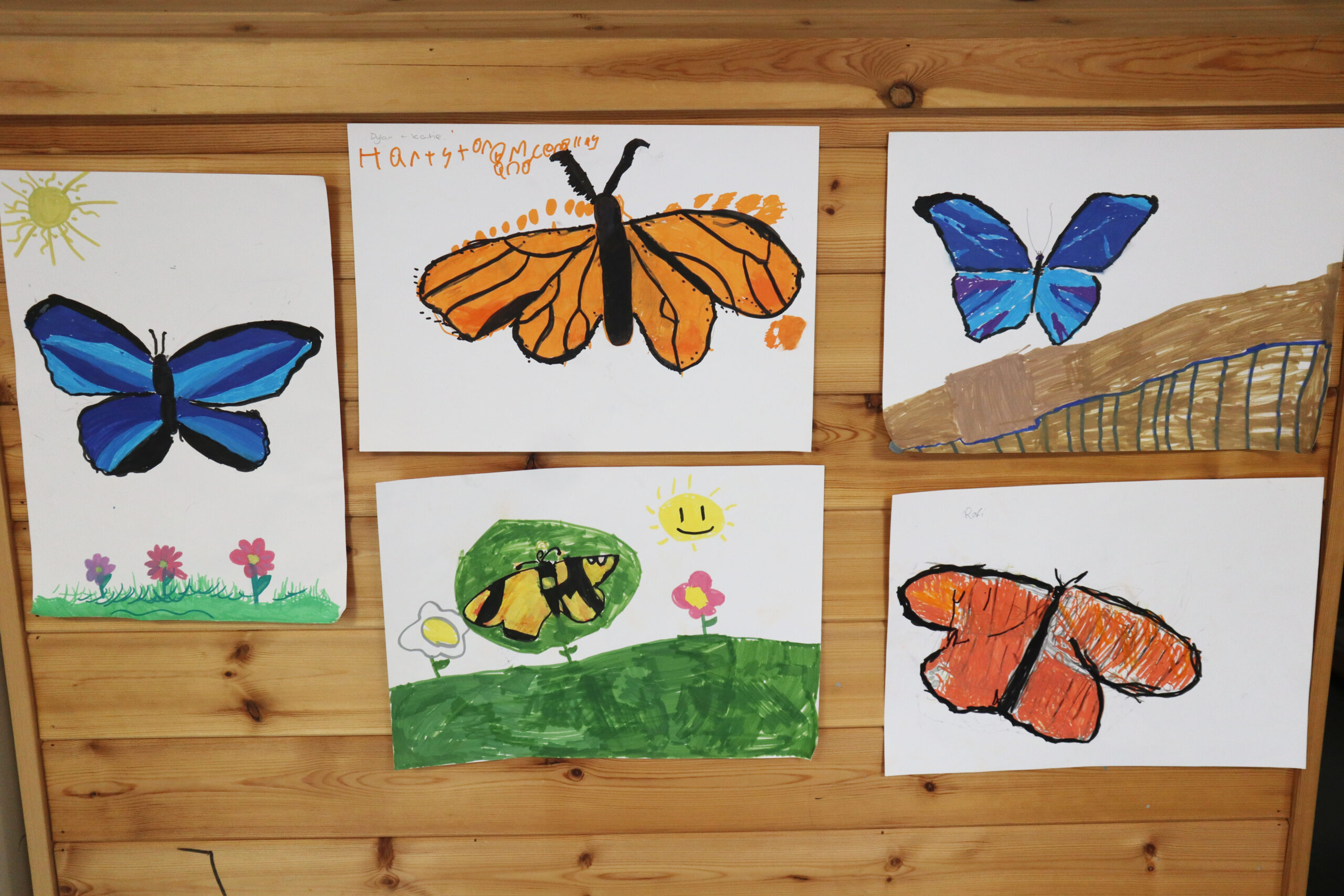
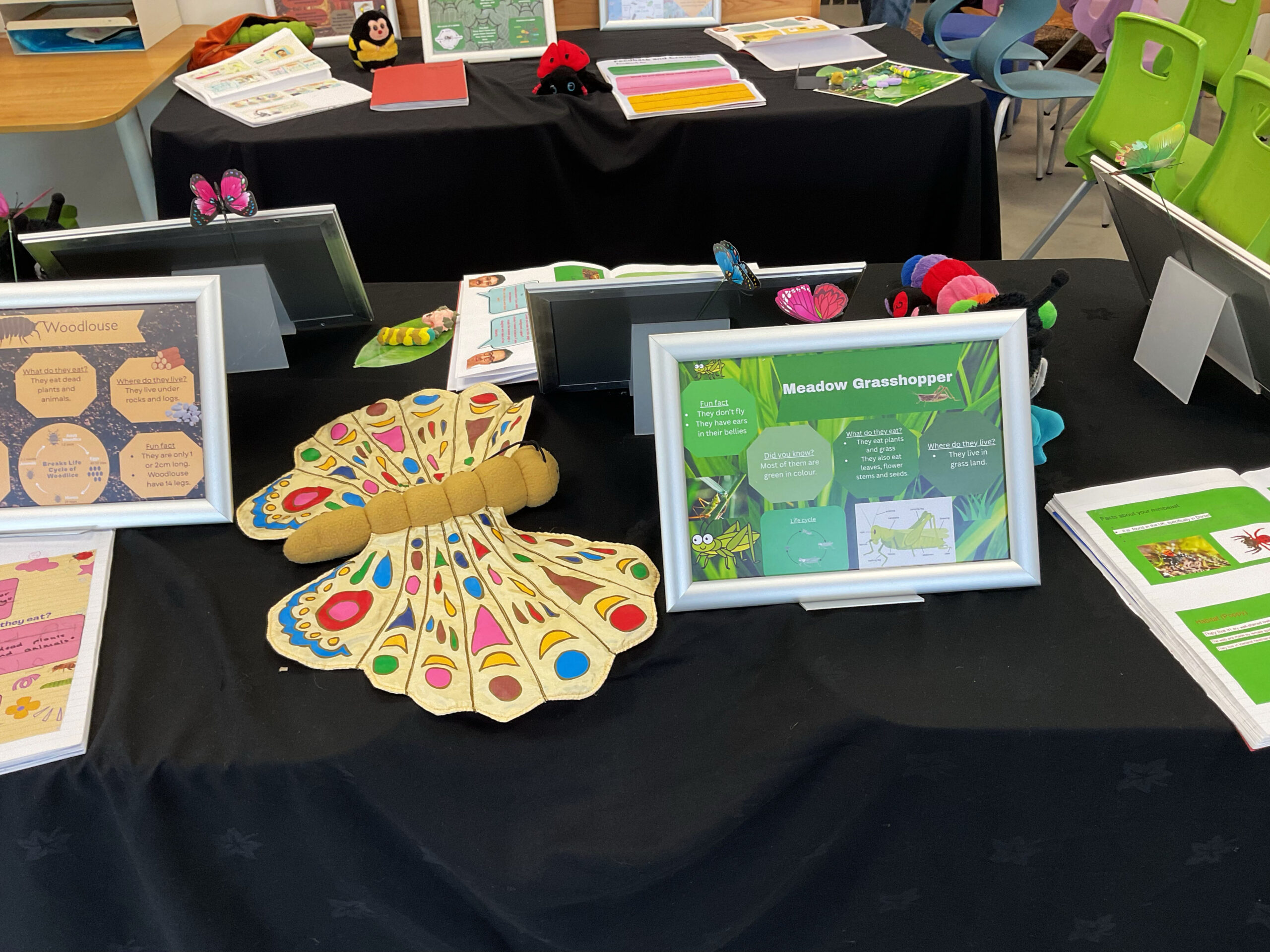
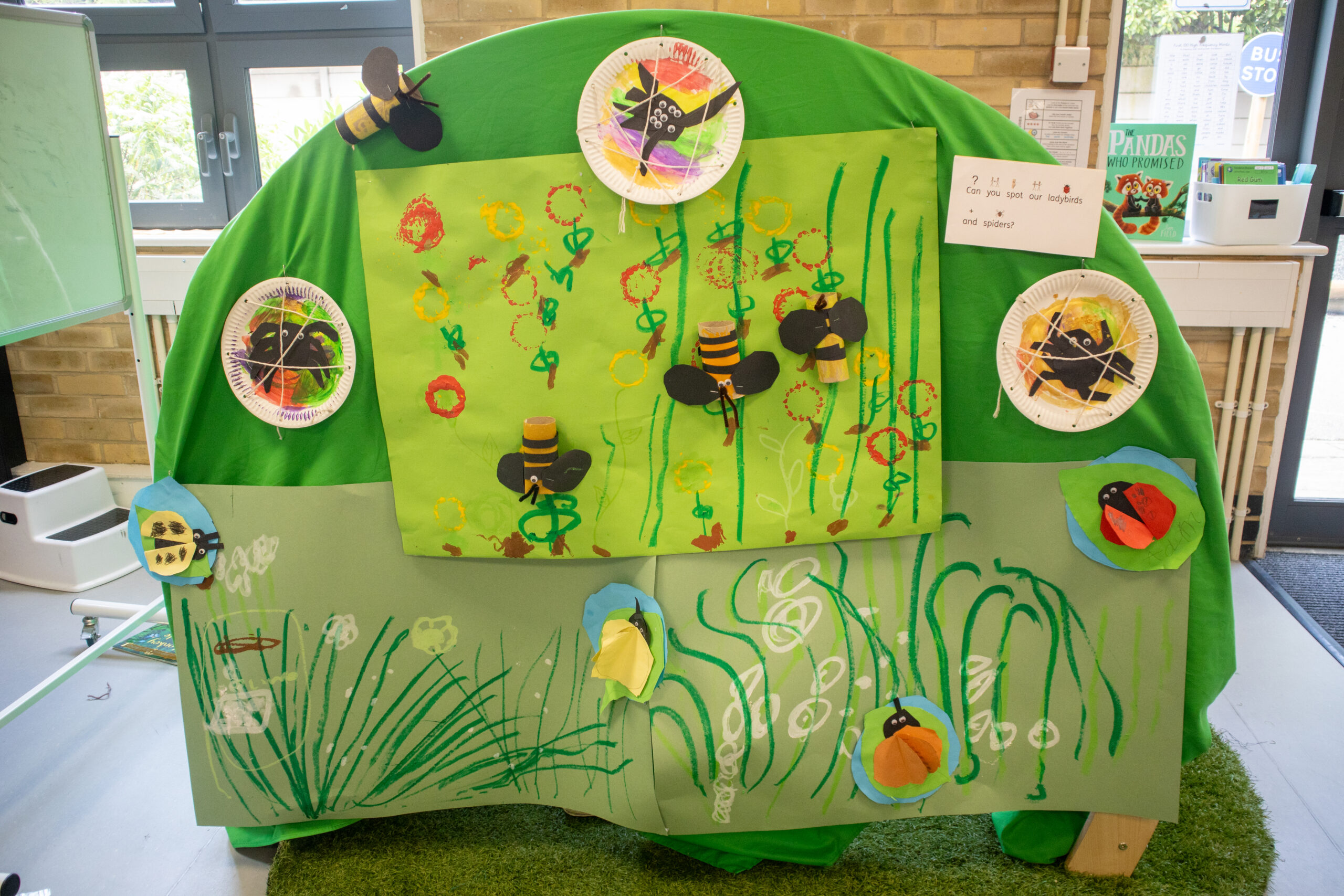
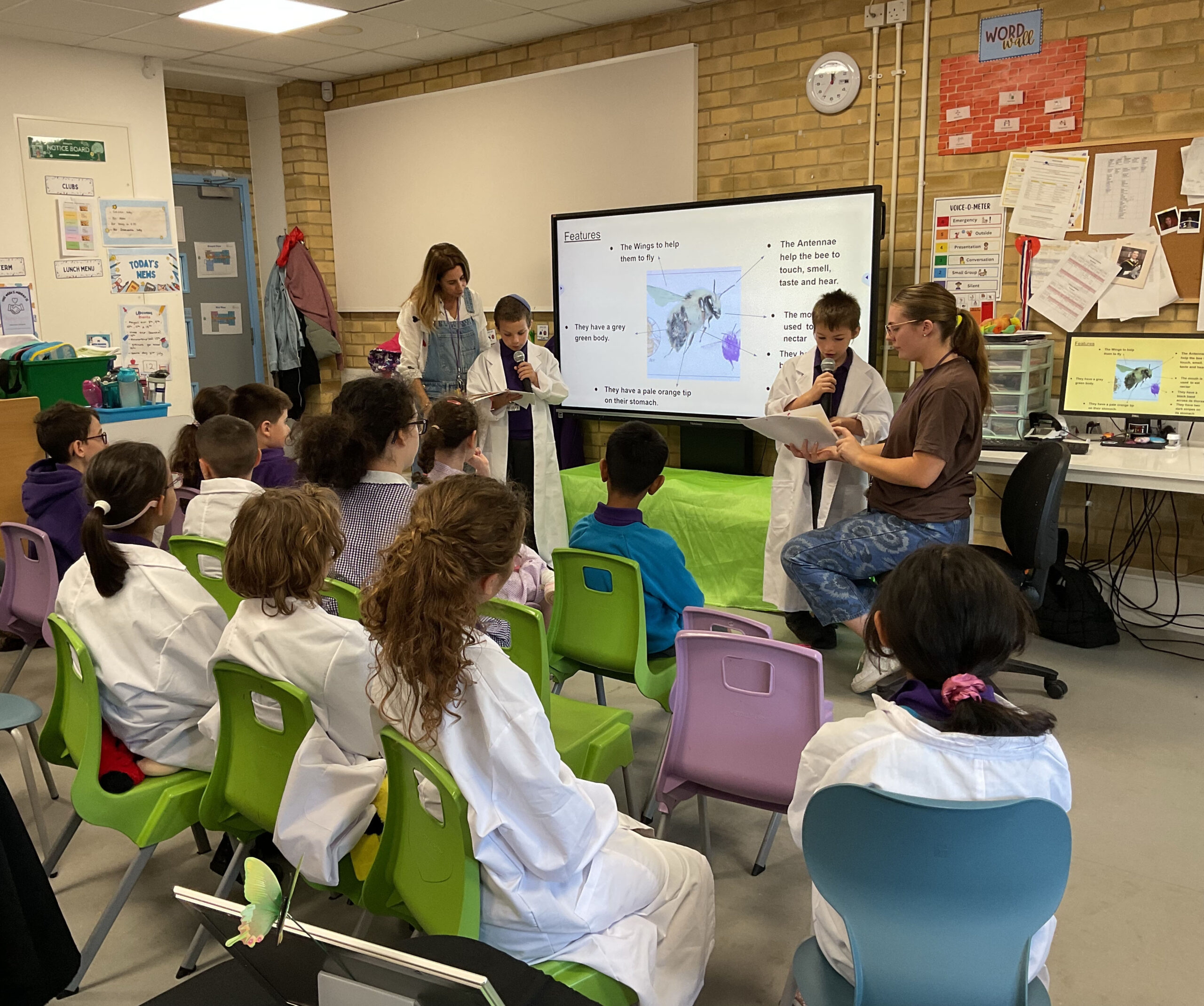
This summer term, Gefen and Rimon worked on an exciting project about minibeasts, a topic that has a real-world impact! We looked at different minibeasts, studied their life cycles and other interesting facts about them. This topic had a strong science focus, including venturing into our field area at school and the park to investigate the minibeast habitats and classifications. We will looked at how important it is to look after minibeasts which links to our big question ‘How can we protect and support minibeasts in our local environment?’ During the second part of our project, we presented our scientific knowledge about minibeasts by creating presentations and then acting as scientists to either present live or on video for our exhibition at the end of the term. This supported our speaking and listening skills.
“I think this project went really well. The pupils in my class have created some truly incredible work. For instance, their insect posters are amazing, and I am so proud of their draft and critique process to create truly outstanding pieces of work. The most challenging part of the project was trying to collect data about the different types of insects we saw. Roxbourne Park is hard to find insects in, and I think that collecting data might have been a secondary focus instead of a primary one, and therefore, I wouldn’t do it again.”
– Kathlenn McEnallay
“I like seeing the butterflies” – Eli F
“I learnt about life cycles of minibeasts” – Eli C
“ I enjoyed the seed planting” – K
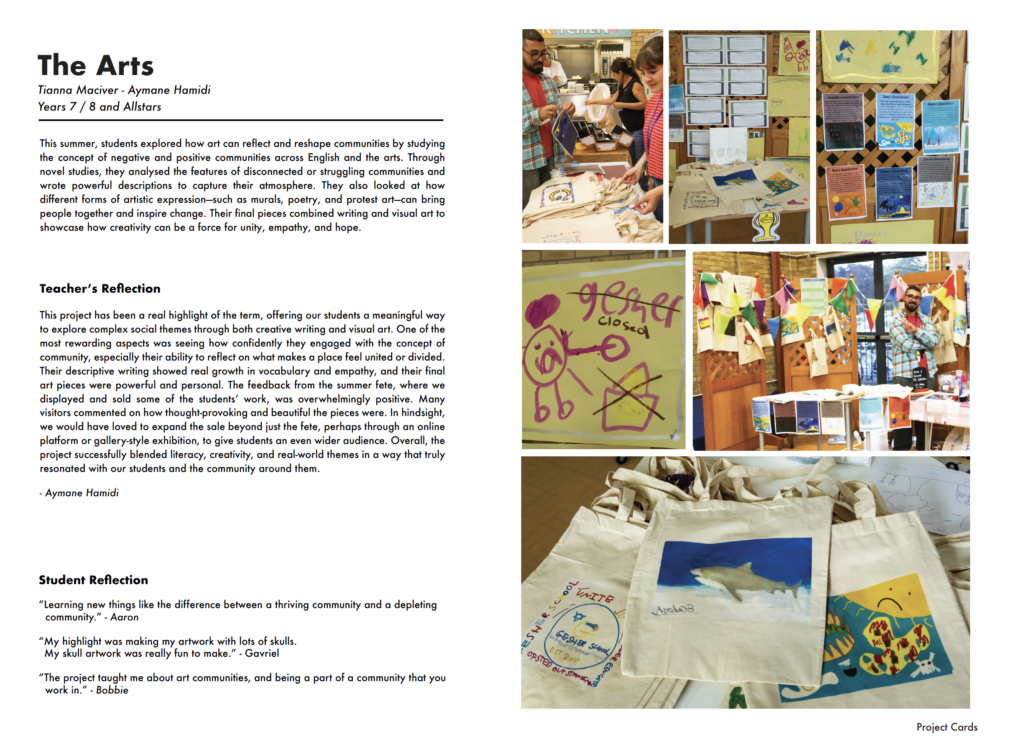
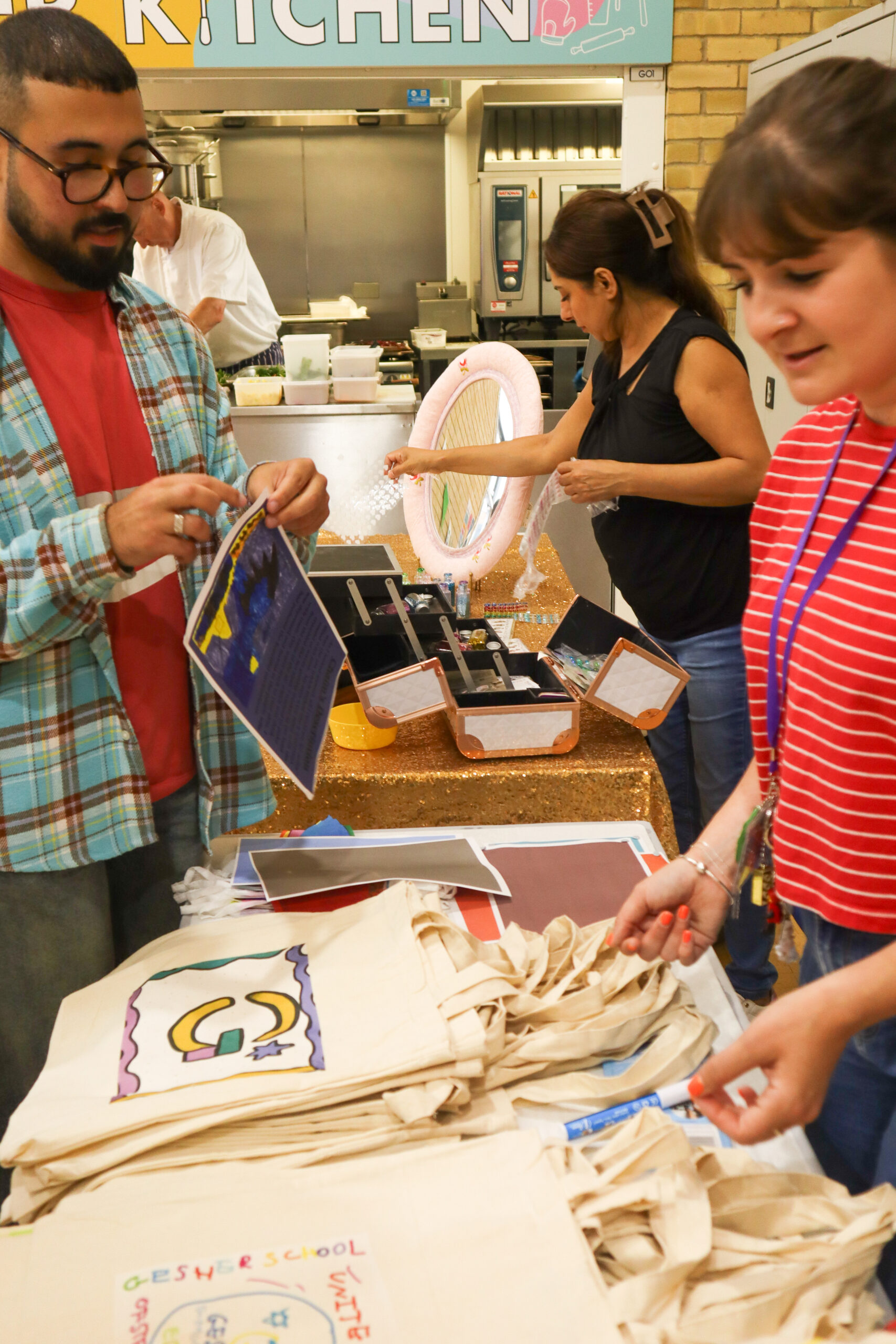
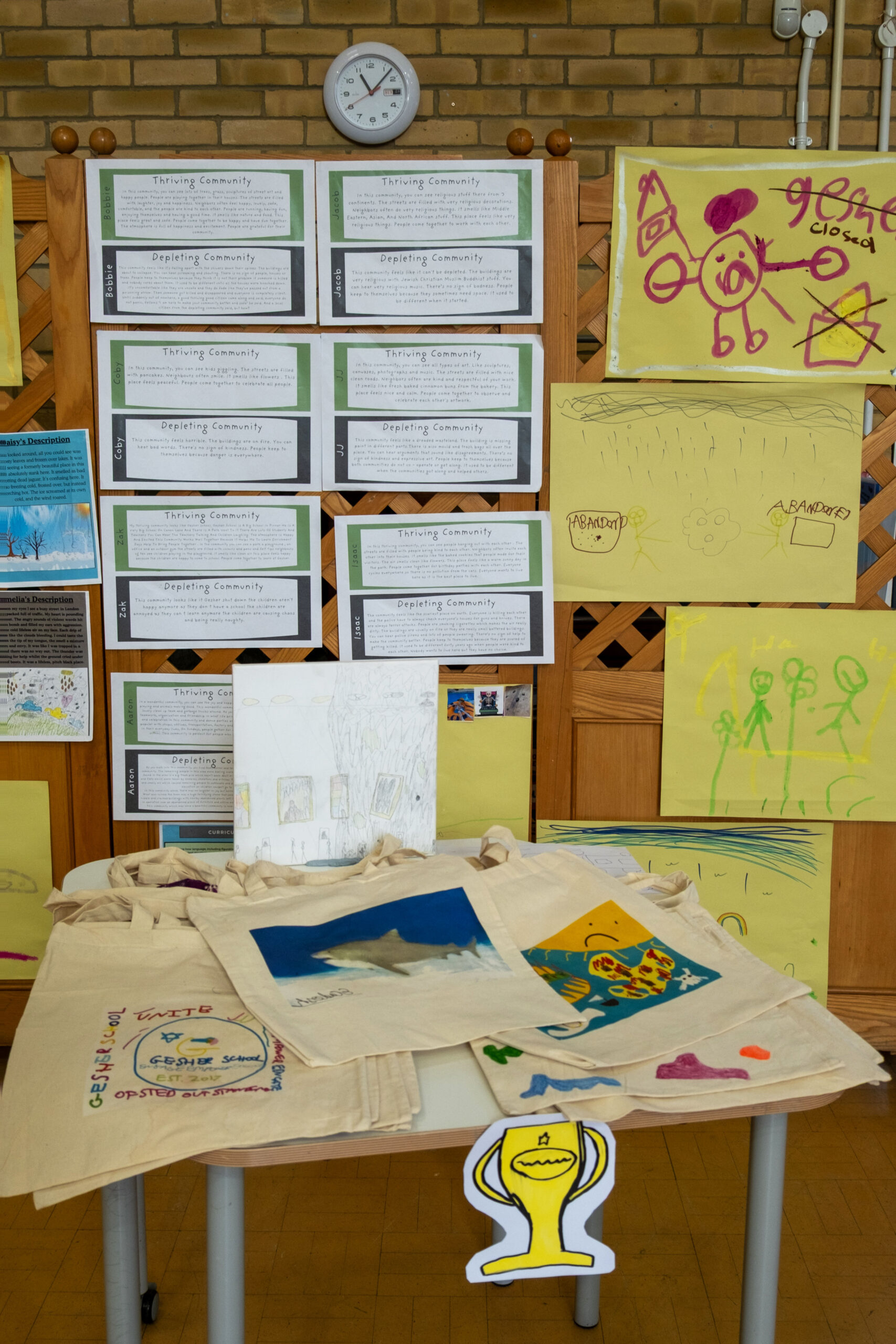
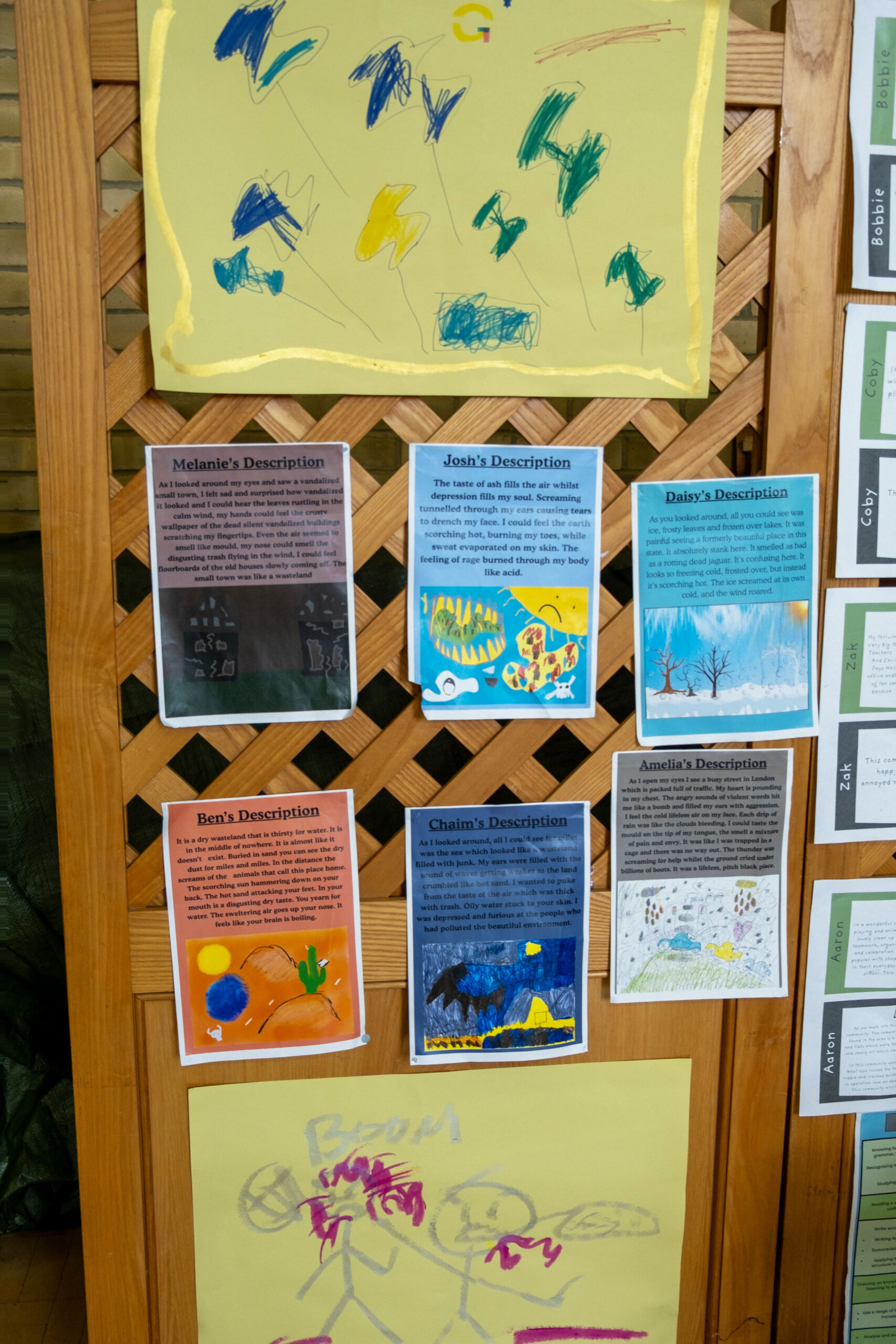
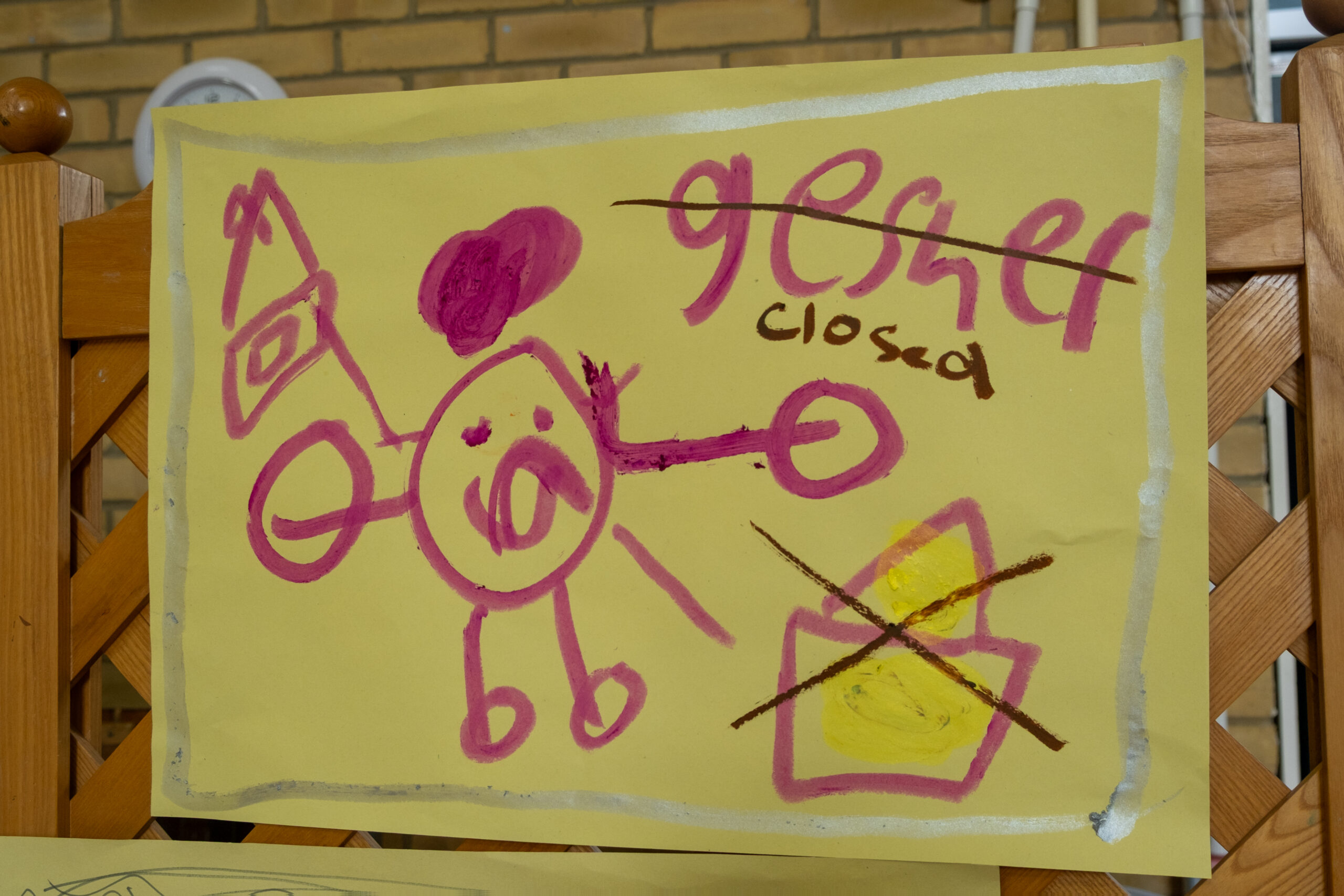
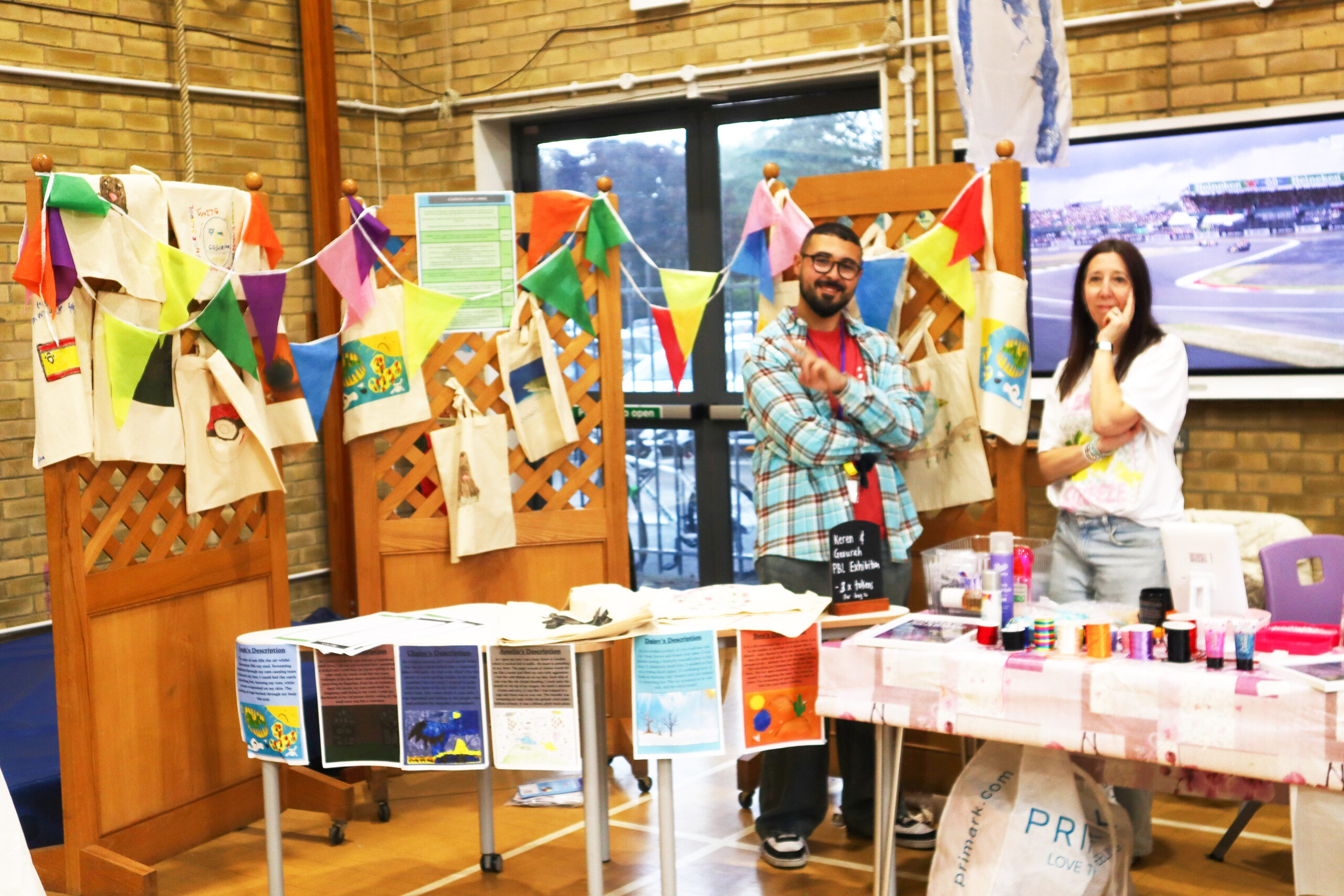
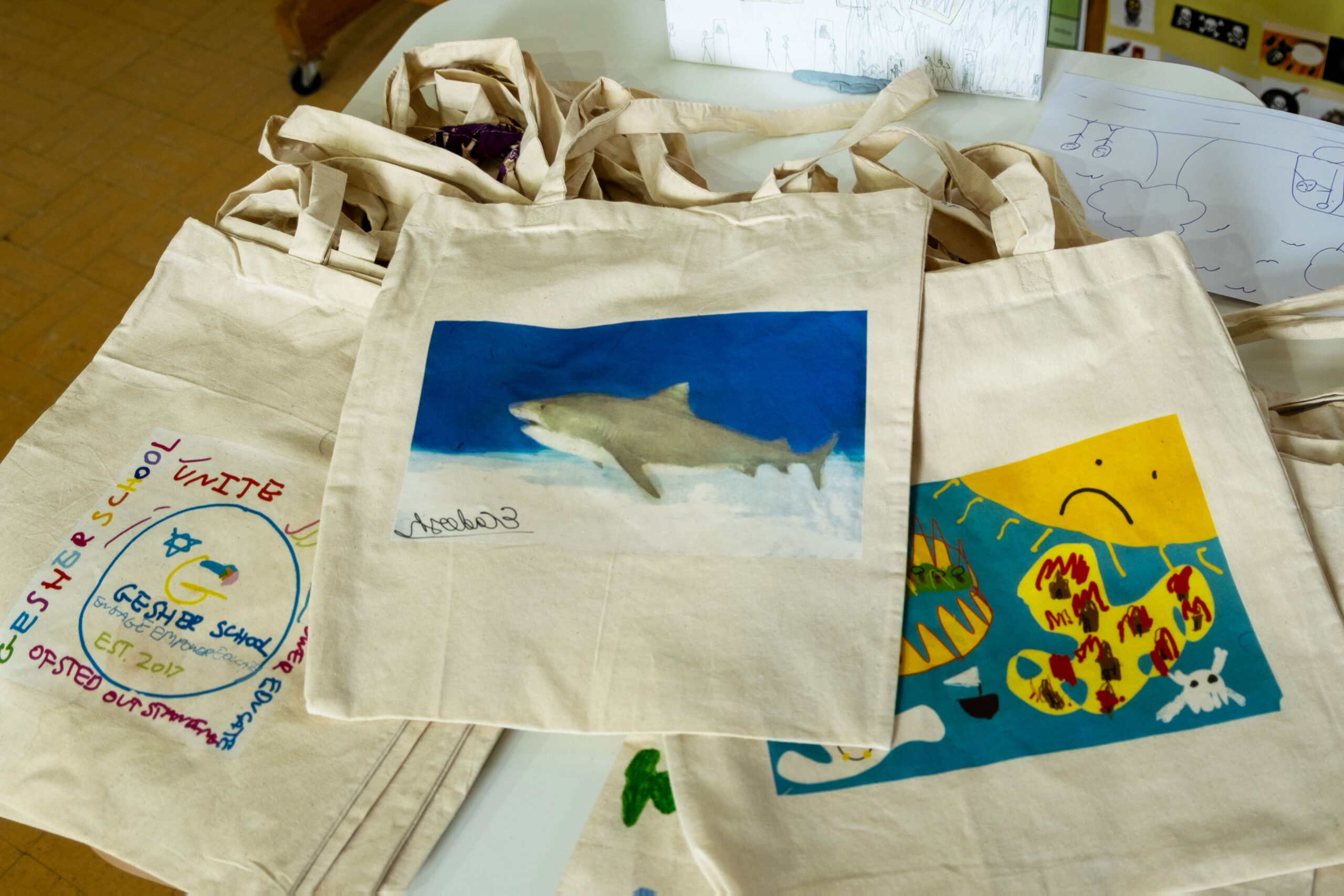
This summer, students explored how art can reflect and reshape communities by studying the concept of negative and positive communities across English and the arts. Through novel studies, they analysed the features of disconnected or struggling communities and wrote powerful descriptions to capture their atmosphere. They also looked at how different forms of artistic expression—such as murals, poetry, and protest art—can bring people together and inspire change. Their final pieces combined writing and visual art to showcase how creativity can be a force for unity, empathy, and hope.
“This project has been a real highlight of the term, offering our students a meaningful way to explore complex social themes through both creative writing and visual art. One of the most rewarding aspects was seeing how confidently they engaged with the concept of community, especially their ability to reflect on what makes a place feel united or divided. Their descriptive writing showed real growth in vocabulary and empathy, and their final art pieces were powerful and personal. The feedback from the summer fete, where we displayed and sold some of the studentsʼ work, was overwhelmingly positive. Many visitors commented on how thought-provoking and beautiful the pieces were. In hindsight, we would have loved to expand the sale beyond just the fete, perhaps through an online platform or gallery-style exhibition, to give students an even wider audience. Overall, the project successfully blended literacy, creativity, and real-world themes in a way that truly resonated with our students and the community around them.”
– Aymane Hamidi
“Learning new things like the difference between a thriving community and a depleting community” – Aaron
“My highlight was making my artwork with lots of skulls. My skull artwork was really fun to make” – Gavriel
“The project taught me about art communities, and being a part of a community that you work in” – Bobbie
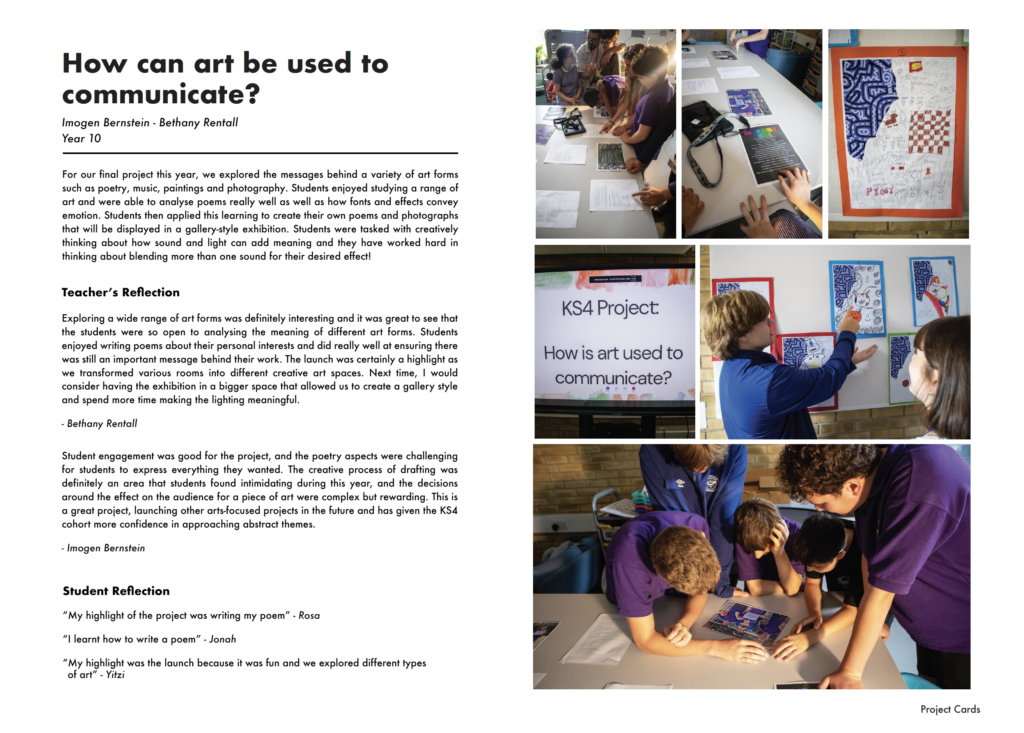
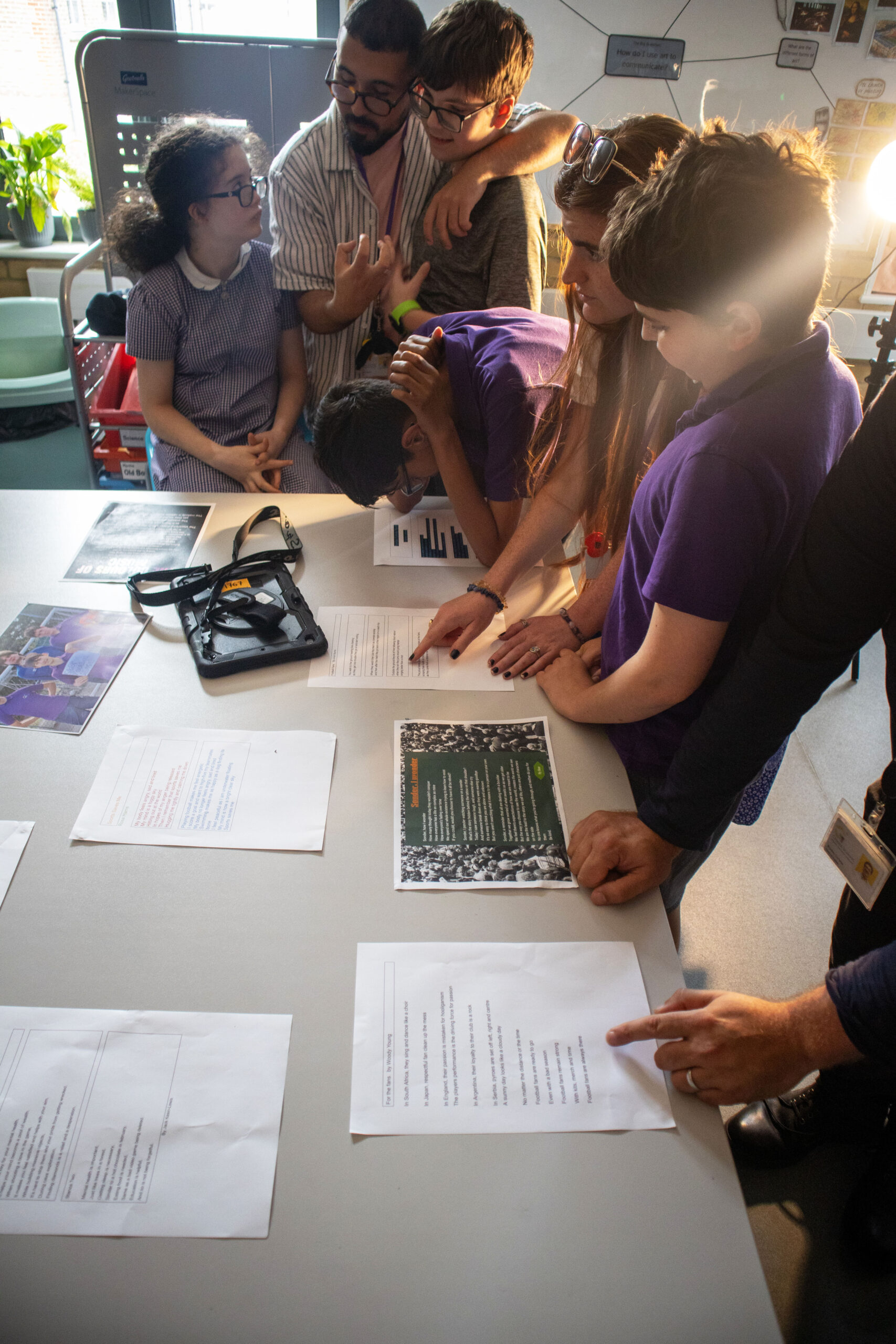
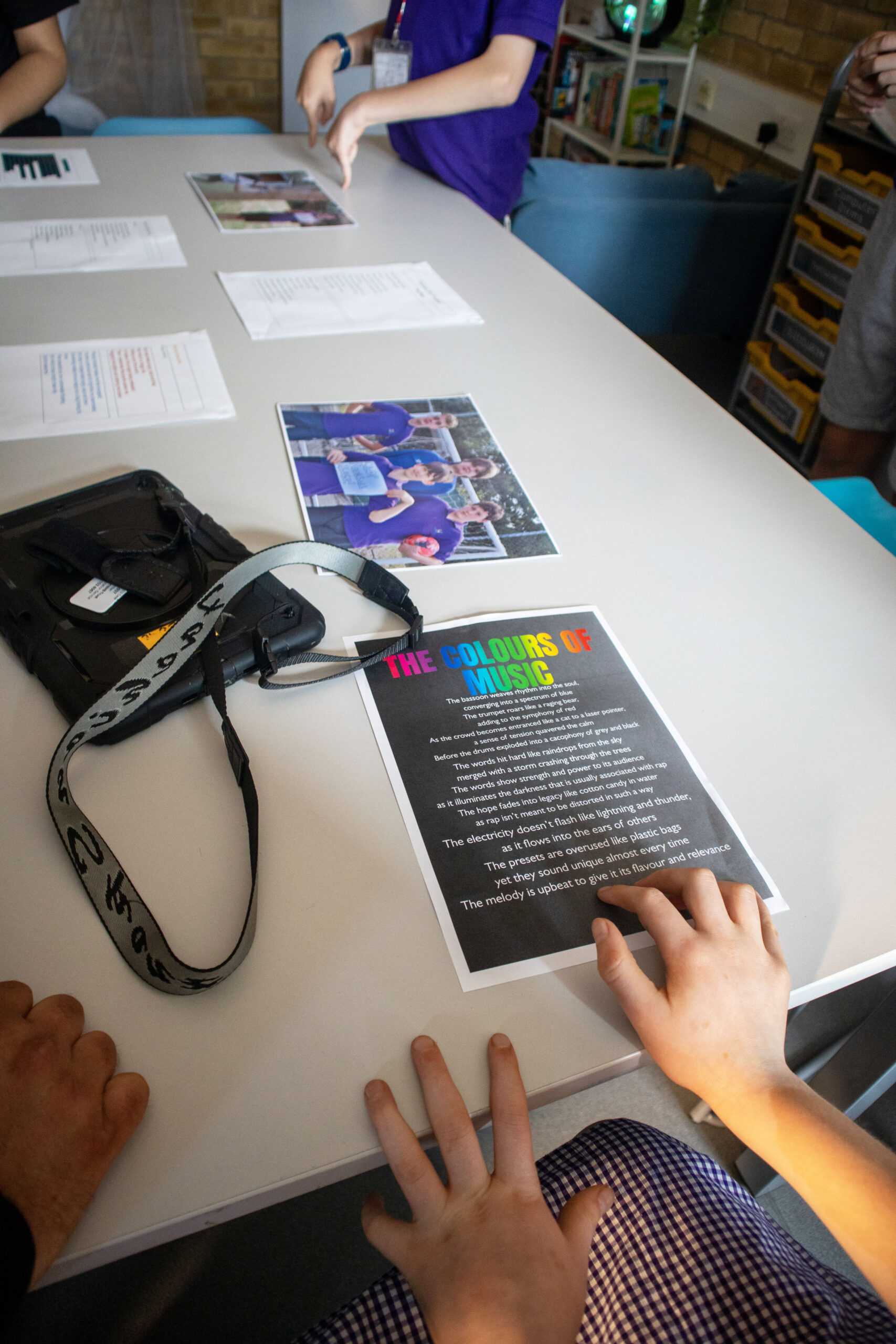
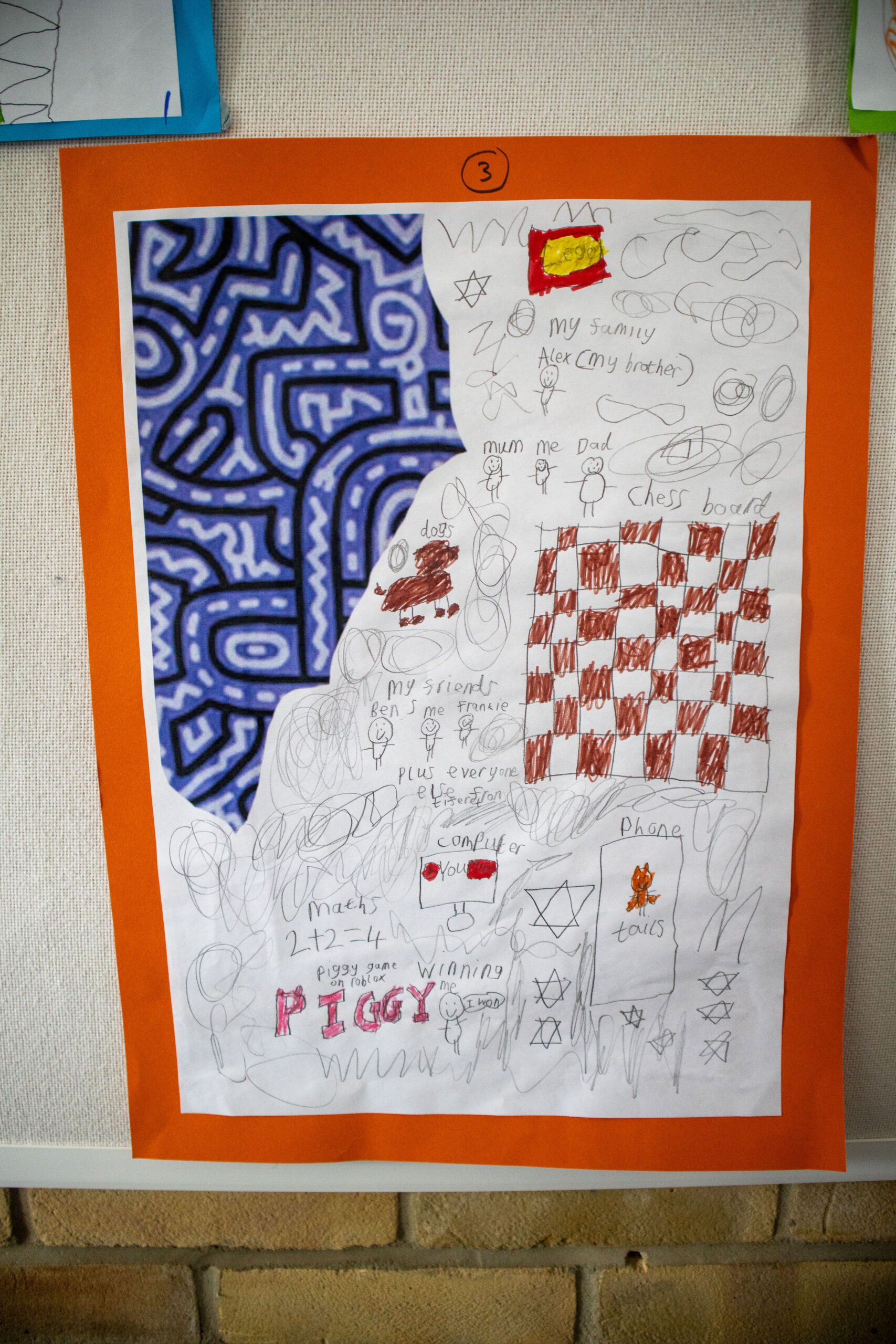
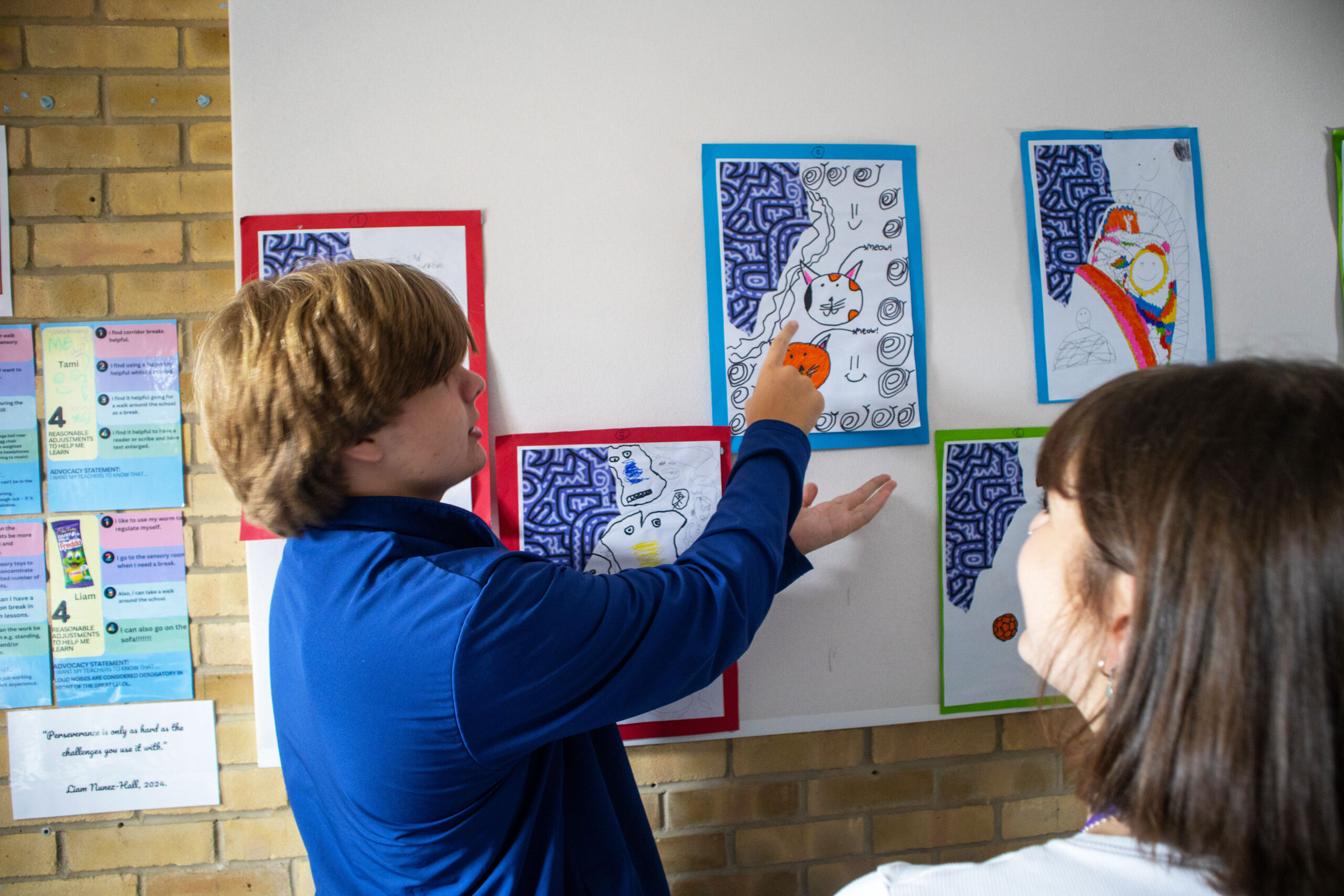
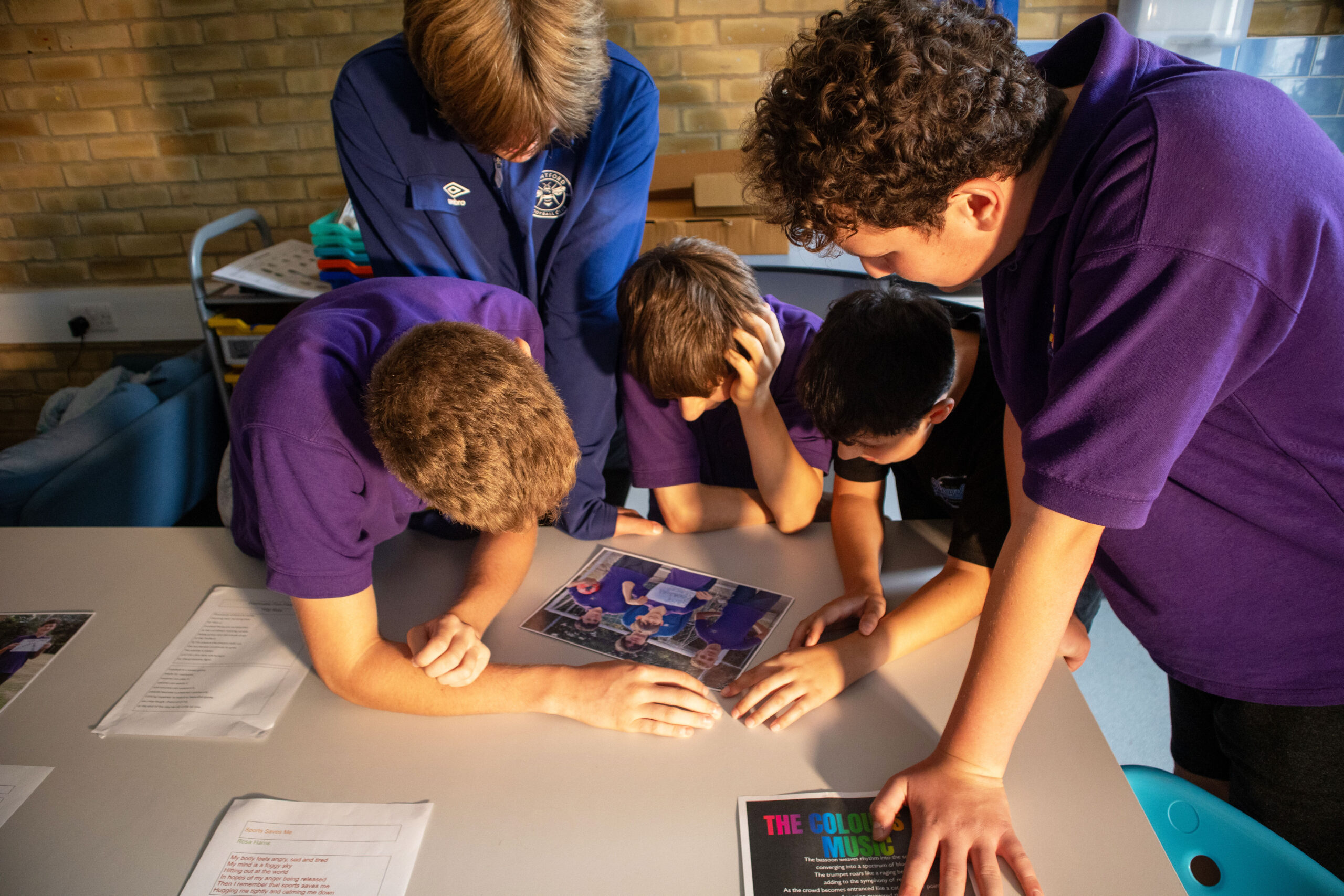
For our final project this year, we explored the messages behind a variety of art forms such as poetry, music, paintings and photography. Students enjoyed studying a range of art and were able to analyse poems really well as well as how fonts and effects convey emotion. Students then applied this learning to create their own poems and photographs that will be displayed in a gallery-style exhibition. Students were tasked with creatively thinking about how sound and light can add meaning and they have worked hard in thinking about blending more than one sound for their desired effect!
“Exploring a wide range of art forms was definitely interesting and it was great to see that the students were so open to analysing the meaning of different art forms. Students enjoyed writing poems about their personal interests and did really well at ensuring there was still an important message behind their work. The launch was certainly a highlight as we transformed various rooms into different creative art spaces. Next time, I would consider having the exhibition in a bigger space that allowed us to create a gallery style and spend more time making the lighting meaningful.”
– Bethany Rentall
“My highlight of the project was writing my poem” – Rosa
“I learnt how to write a poem” – Jonah
“My highlight was the launch because it was fun and we explored different types of art” -Yitzi
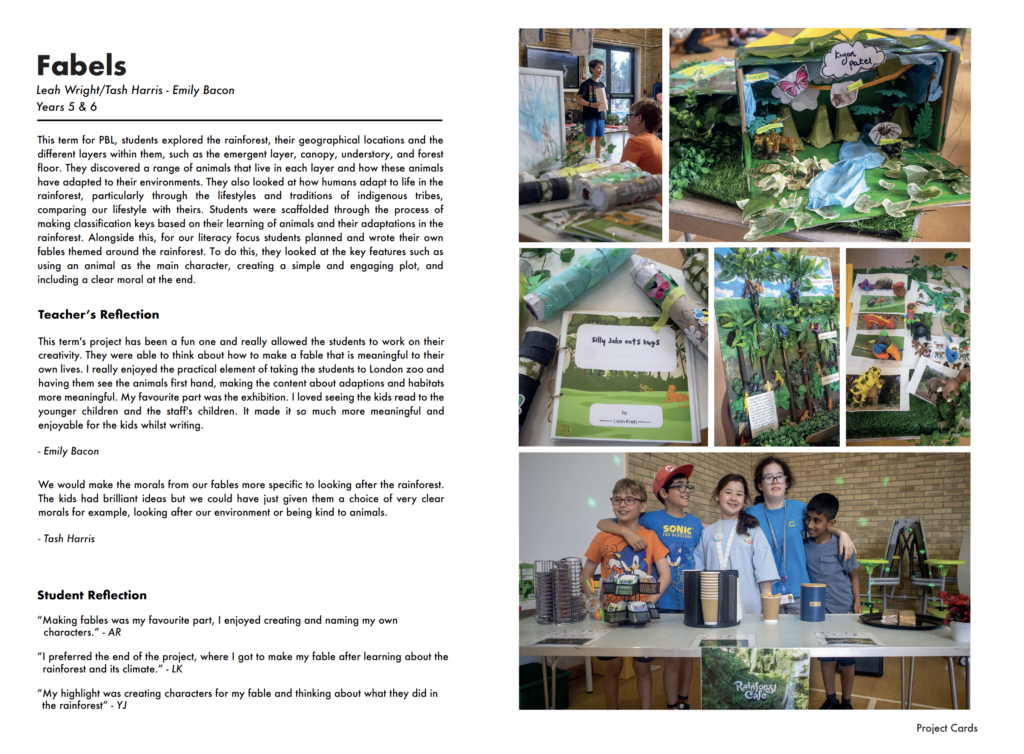
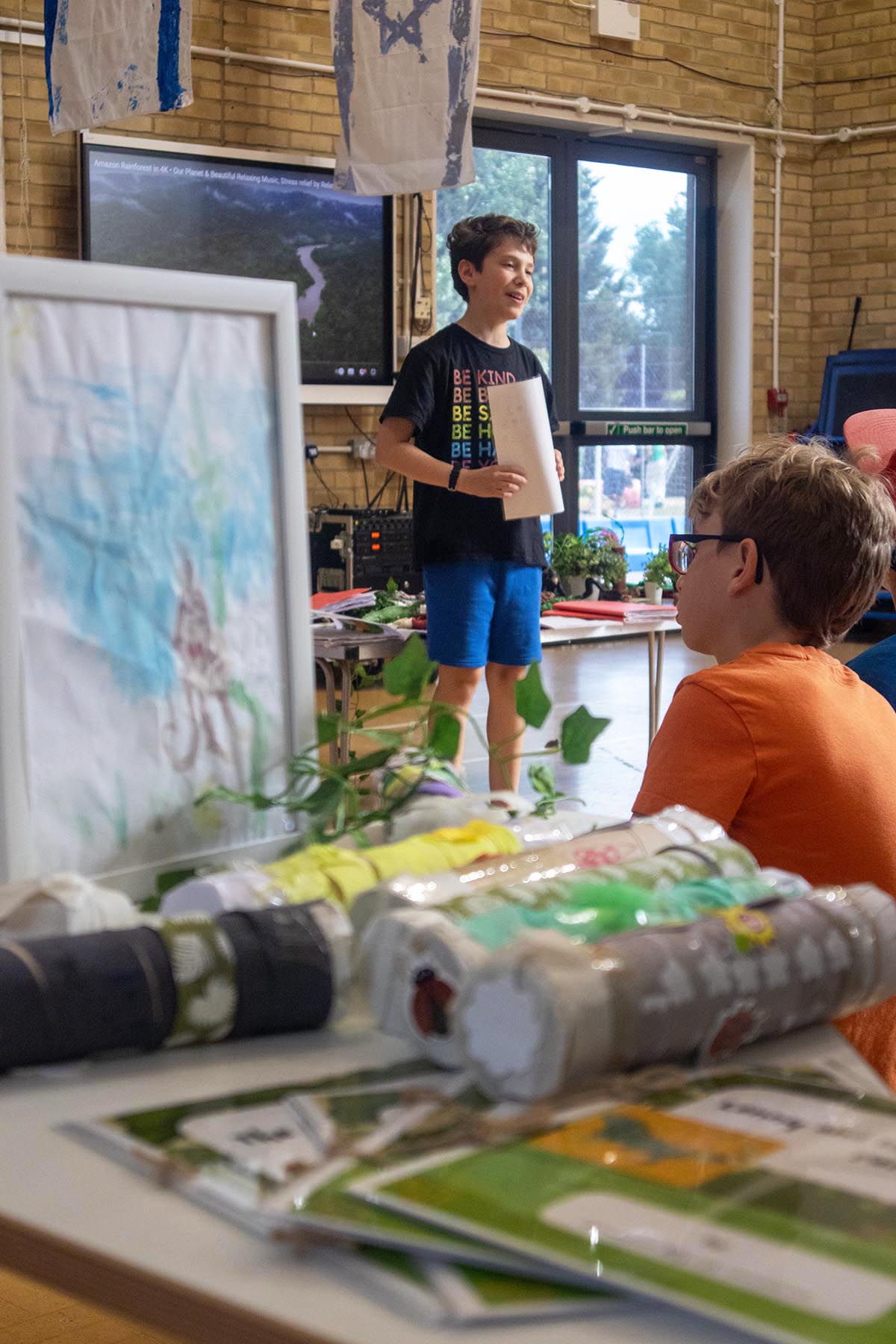
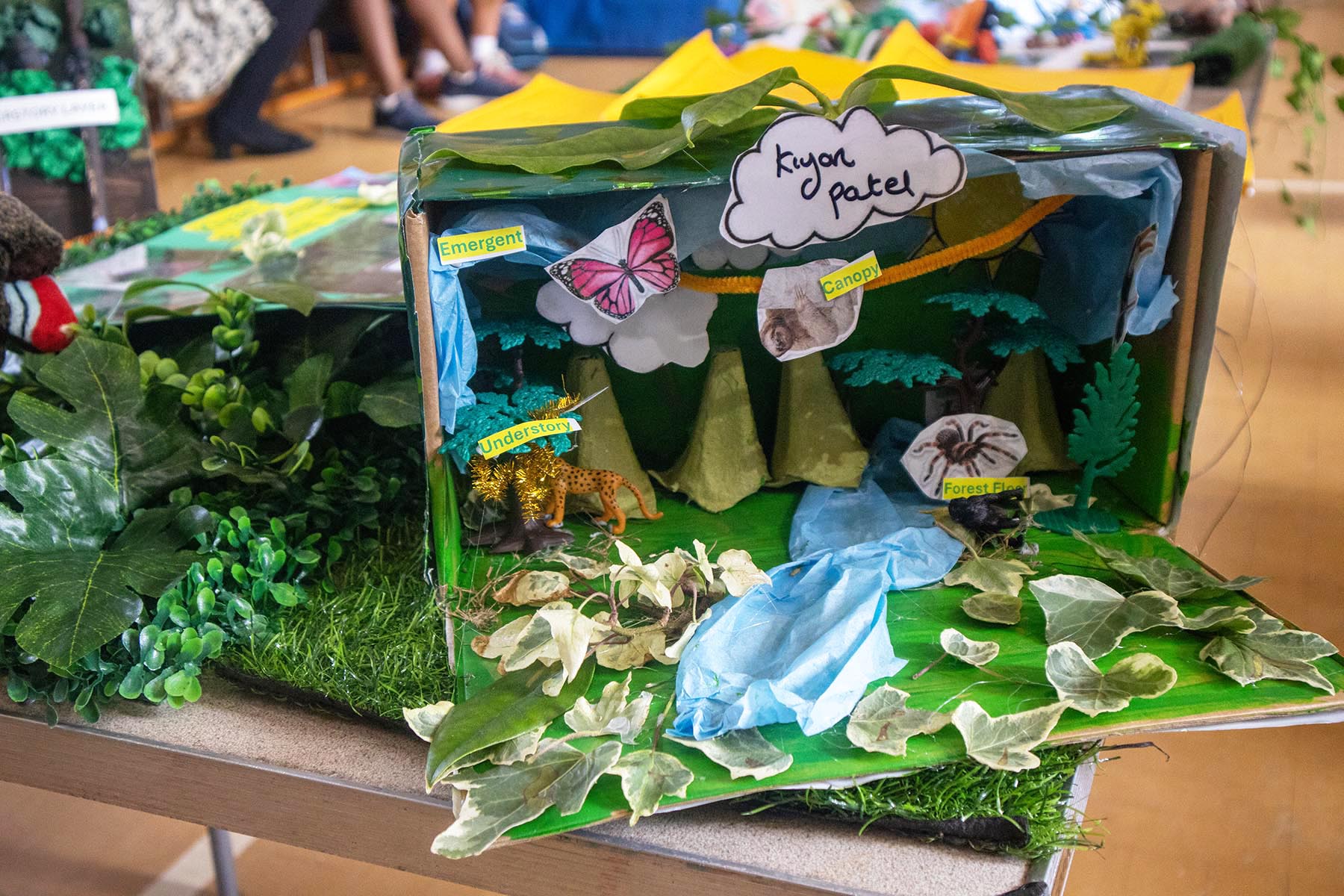
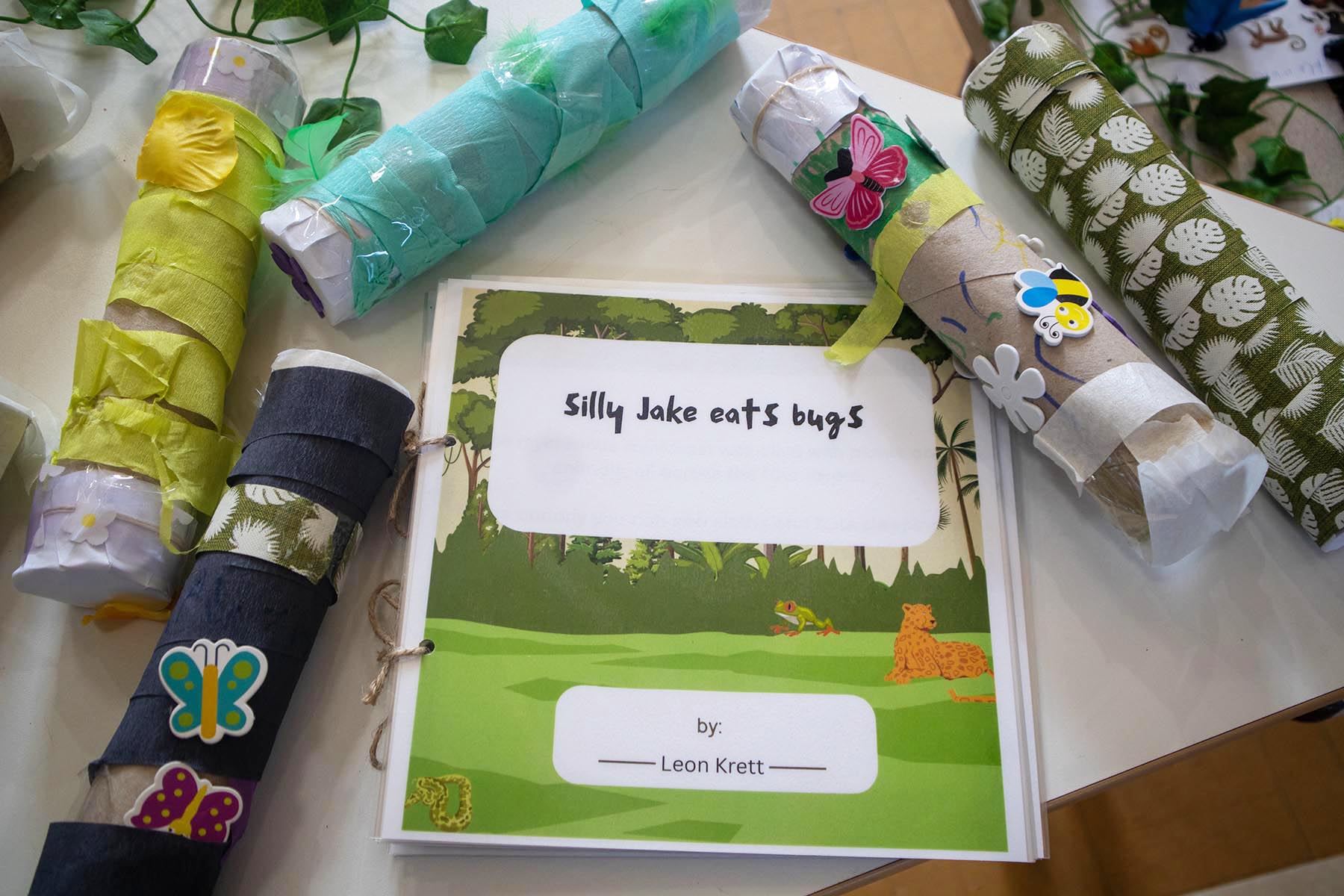
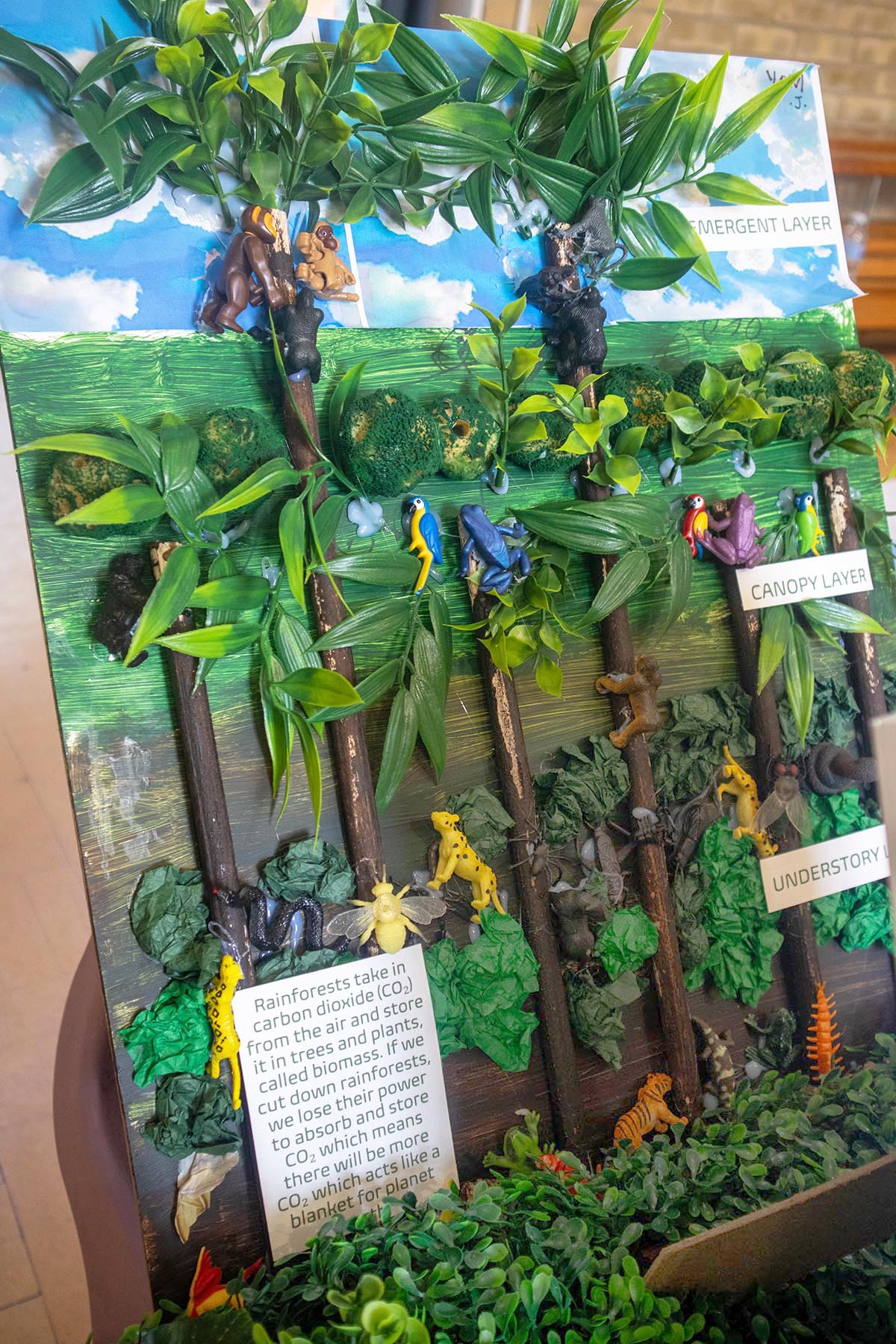
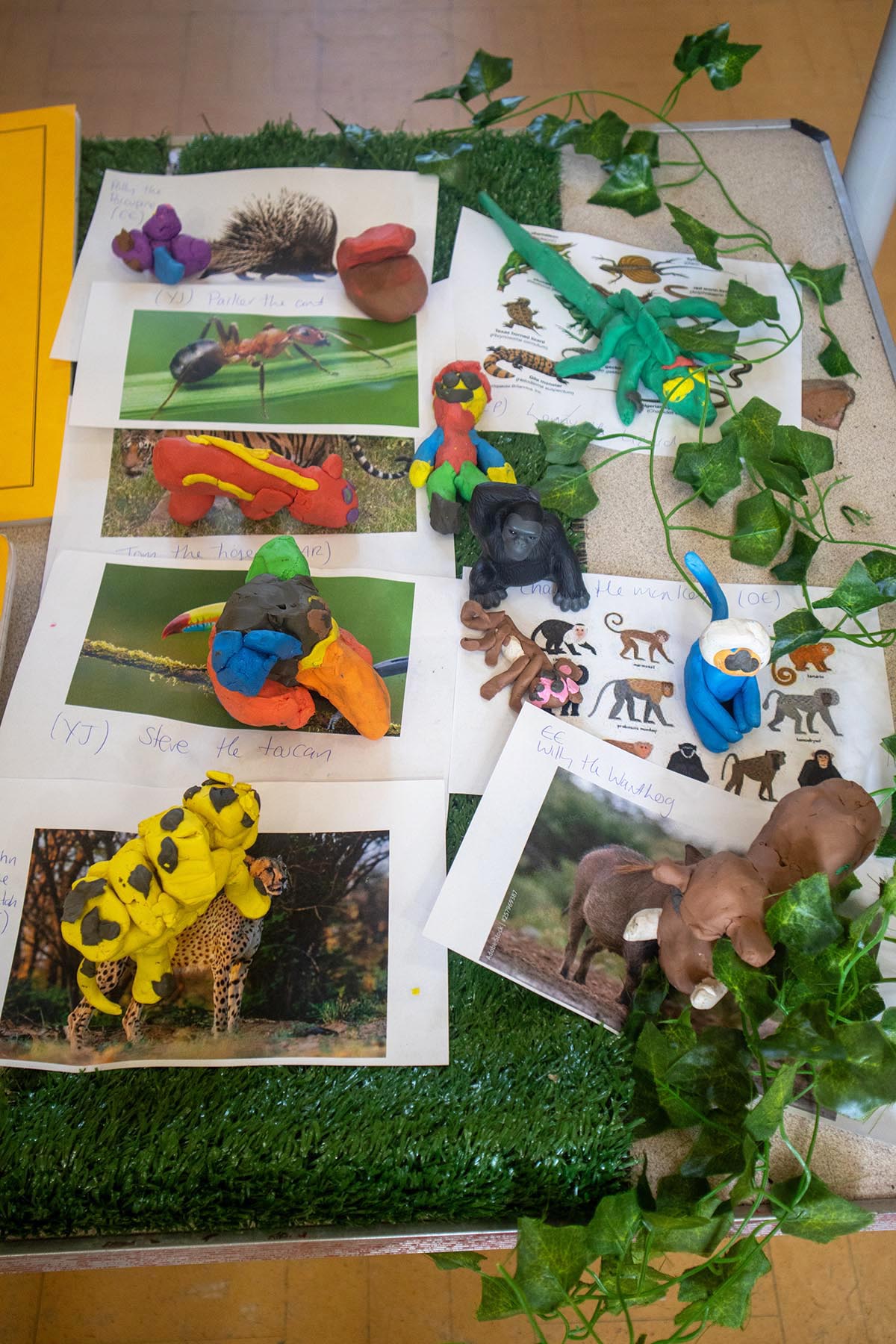
This term for PBL, students explored the rainforest, their geographical locations and the different layers within them, such as the emergent layer, canopy, understory, and forest floor. They discovered a range of animals that live in each layer and how these animals have adapted to their environments. They also looked at how humans adapt to life in the rainforest, particularly through the lifestyles and traditions of indigenous tribes, comparing our lifestyle with theirs. Students were scaffolded through the process of making classification keys based on their learning of animals and their adaptations in the rainforest. Alongside this, for our literacy focus students planned and wrote their own fables themed around the rainforest. To do this, they looked at the key features such as using an animal as the main character, creating a simple and engaging plot, and including a clear moral at the end.
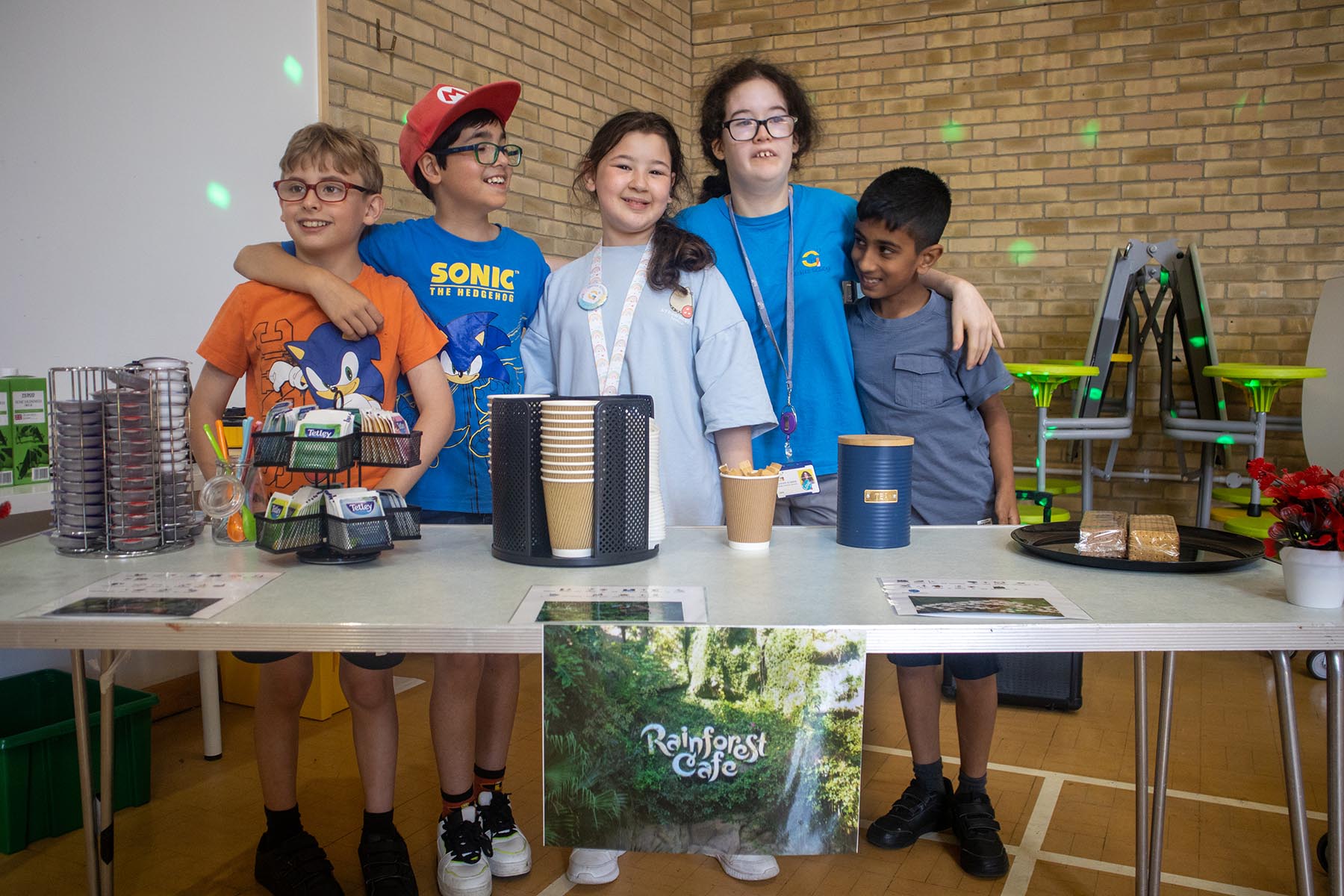
“This term’s project has been a fun one and really allowed the students to work on their creativity. They were able to think about how to make a fable that is meaningful to their own lives. I really enjoyed the practical element of taking the students to London zoo and having them see the animals first hand, making the content about adaptions and habitats more meaningful. My favourite part was the exhibition. I loved seeing the kids read to the younger children and the staff’s children. It made it so much more meaningful and enjoyable for the kids whilst writing”
– Emily Bacon
“Making fables was my favourite part, I enjoyed creating and naming my own characters.” – AR
“I preferred the end of the project, where I got to make my fable after learning about the rainforest and its climate” – LK
“My highlight was creating characters for my fable and thinking about what they did in the rainforest” -YJ
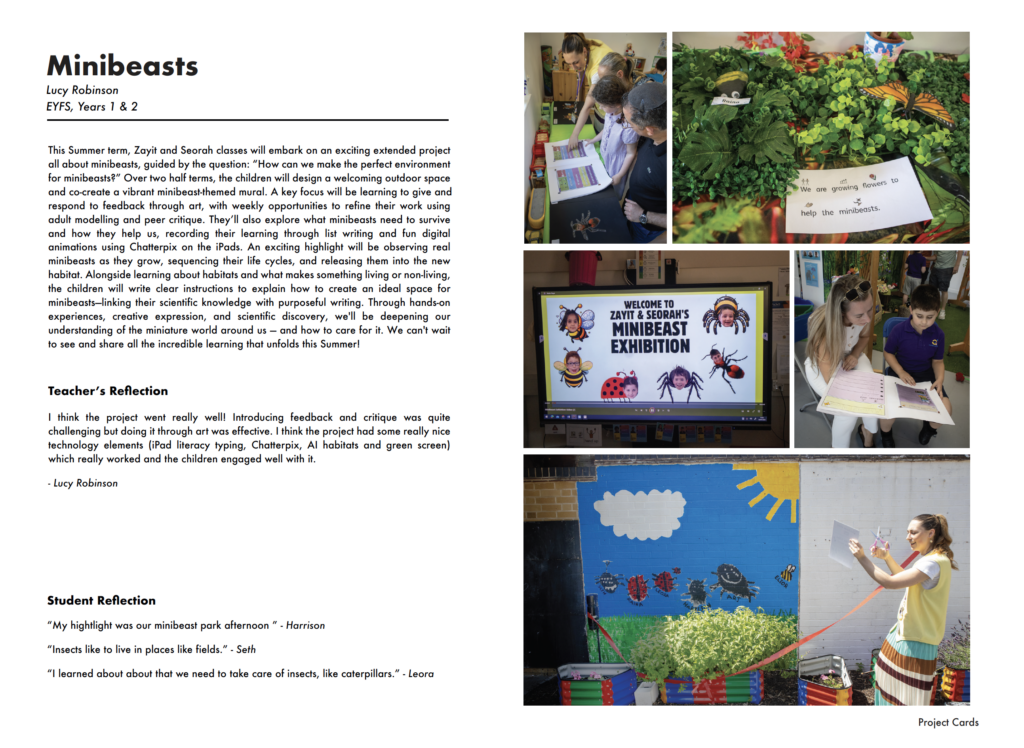
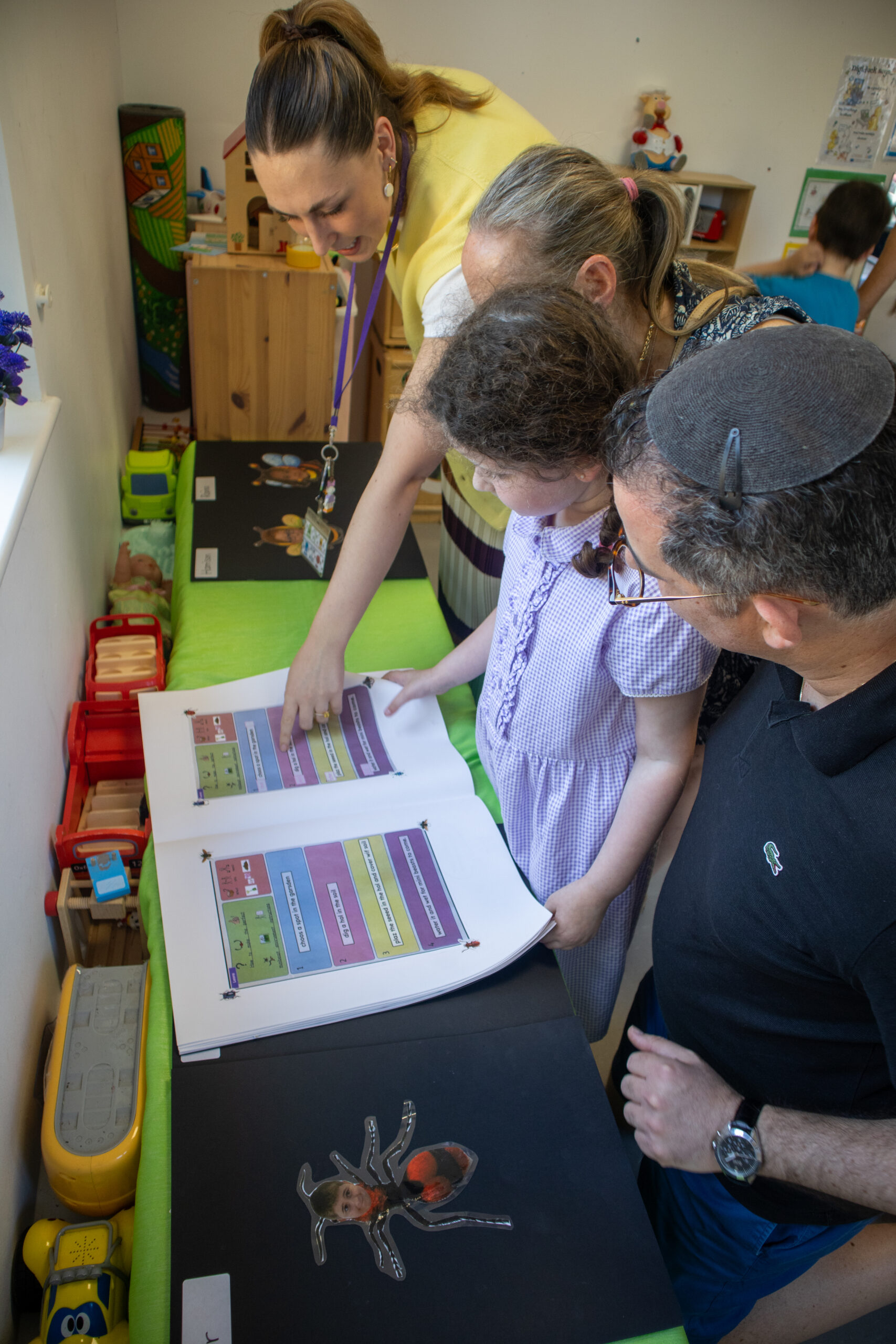
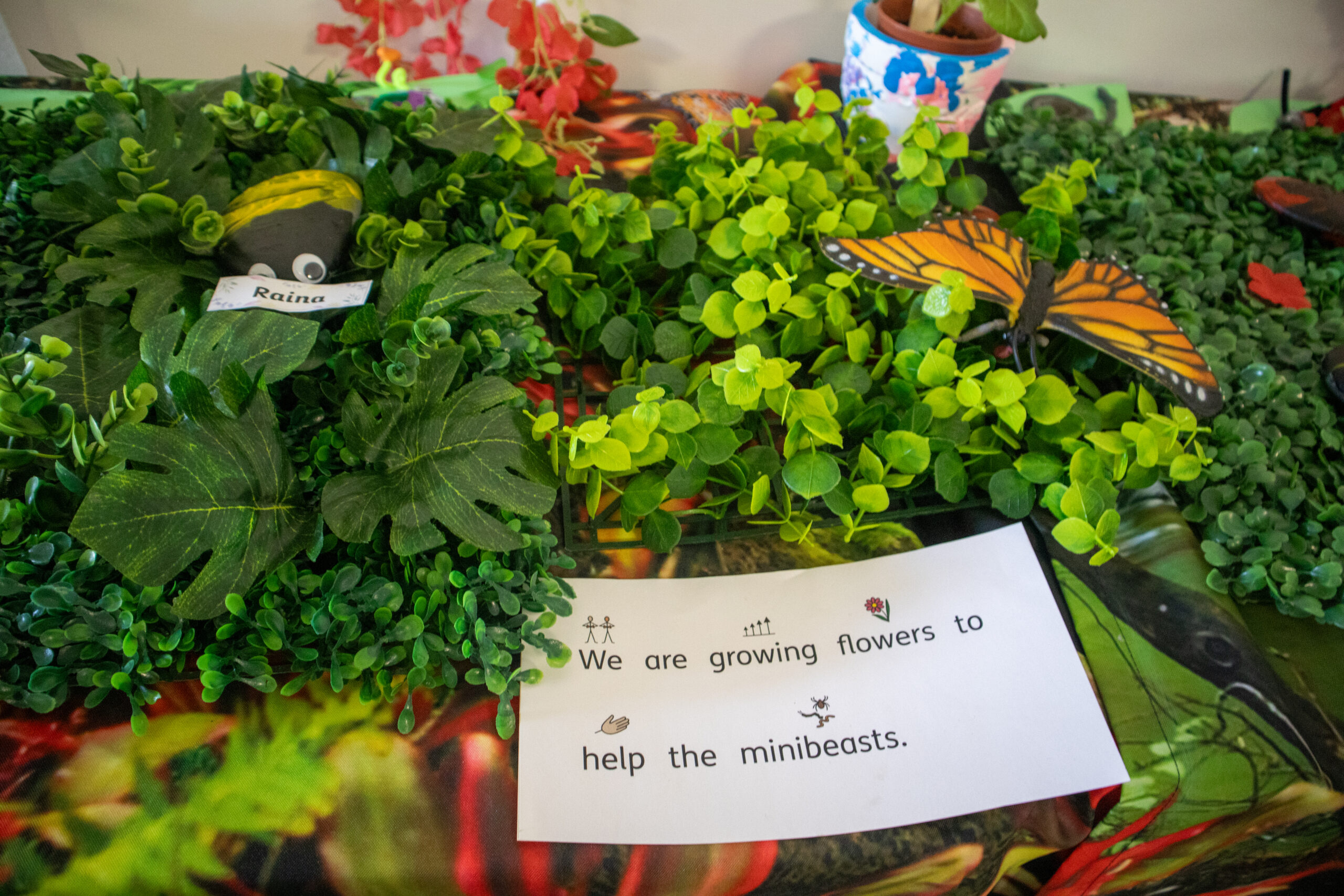
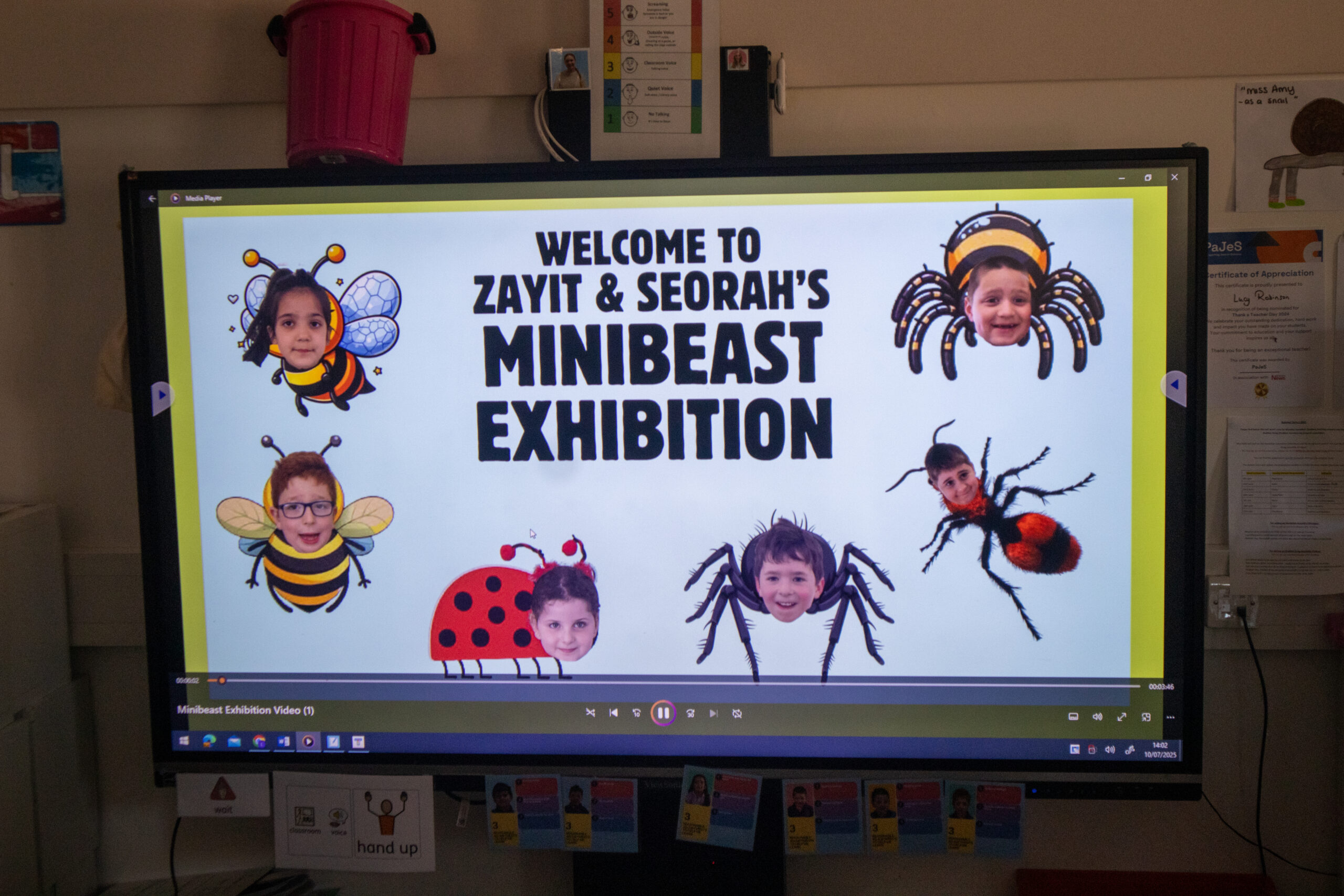
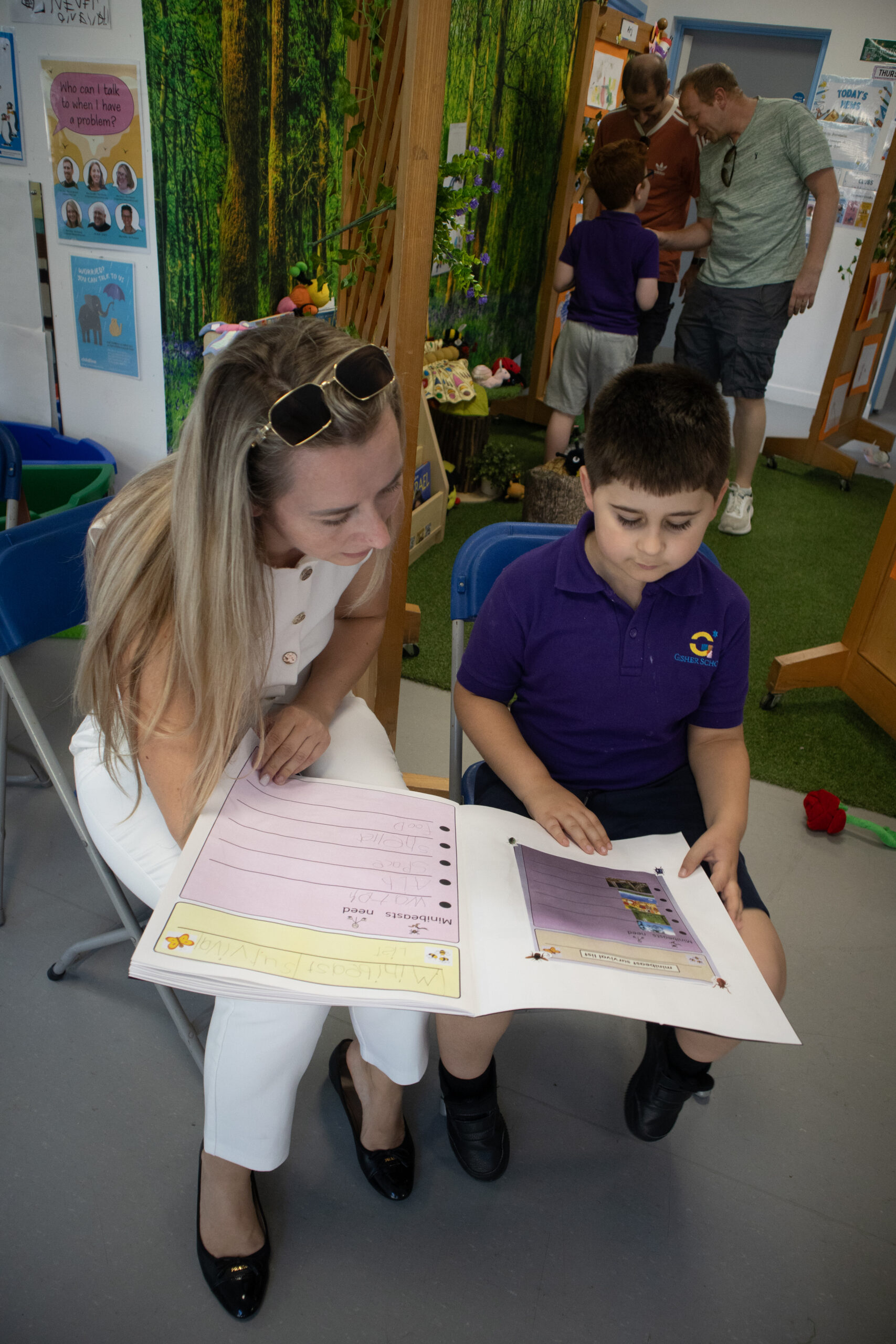
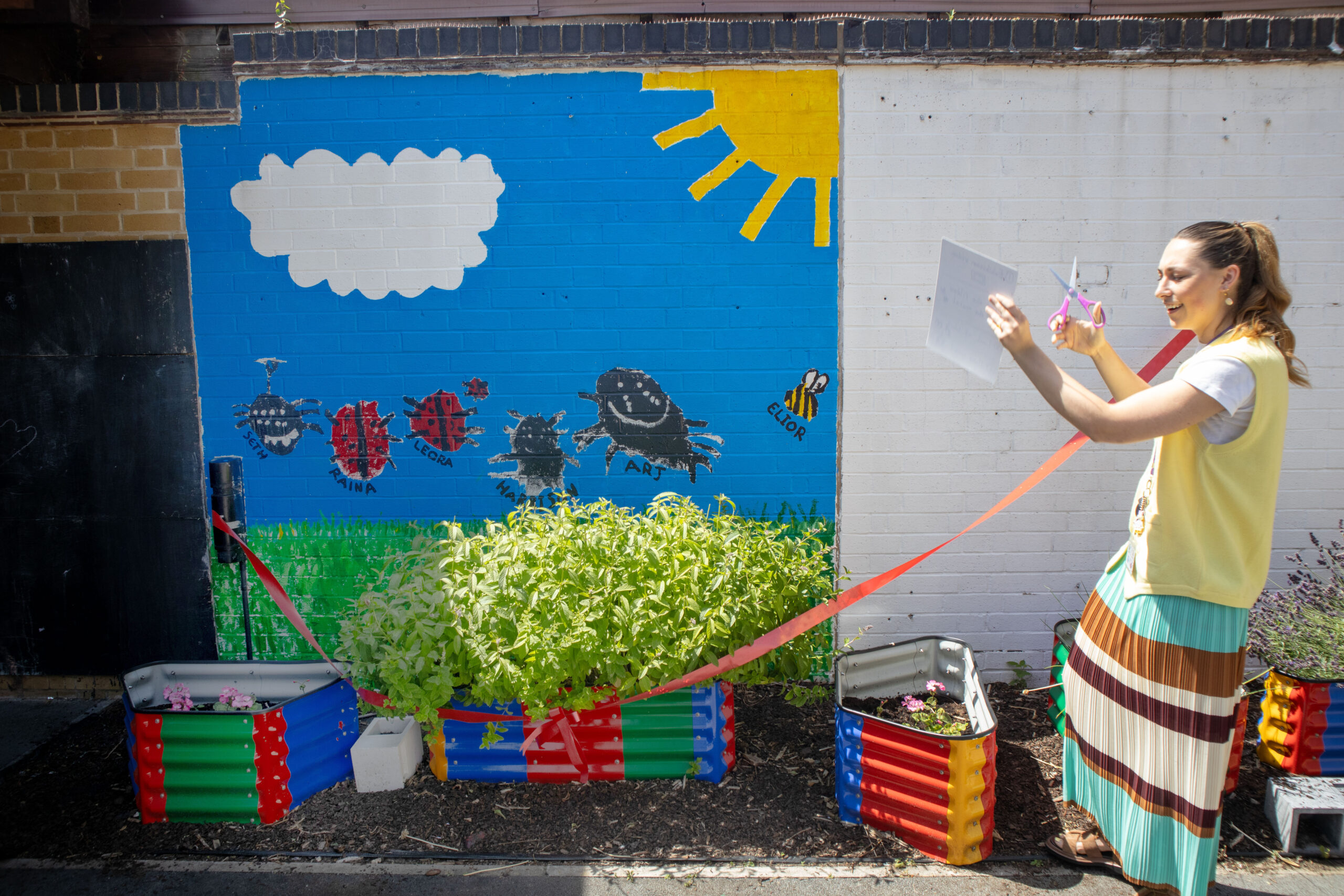
This Summer term, Zayit and Seorah classes will embark on an exciting extended project all about minibeasts, guided by the question: “How can we make the perfect environment for minibeasts?” Over two half terms, the children will design a welcoming outdoor space and co-create a vibrant minibeast-themed mural. A key focus will be learning to give and respond to feedback through art, with weekly opportunities to refine their work using adult modelling and peer critique. Theyʼll also explore what minibeasts need to survive and how they help us, recording their learning through list writing and fun digital animations using Chatterpix on the iPads. An exciting highlight will be observing real minibeasts as they grow, sequencing their life cycles, and releasing them into the new habitat. Alongside learning about habitats and what makes something living or non-living, the children will write clear instructions to explain how to create an ideal space for minibeasts—linking their scientific knowledge with purposeful writing. Through hands-on experiences, creative expression, and scientific discovery, we’ll be deepening our understanding of the miniature world around us — and how to care for it. We can’t wait to see and share all the incredible learning that unfolds this Summer!
“I think the project went really well! Introducing feedback and critique was quite
challenging but doing it through art was effective. I think the project had some really nice
technology elements (iPad literacy typing, Chatterpix, AI habitats and green screen)
which really worked and the children engaged well with it”
– Lucy Robinson
“My highlight was our minibeast park afternoon.” – Harrison
“Insects like to live in places like fields” – Bobby
“I learned about about that we need to take care of insects, like caterpillars.” -Aaron